

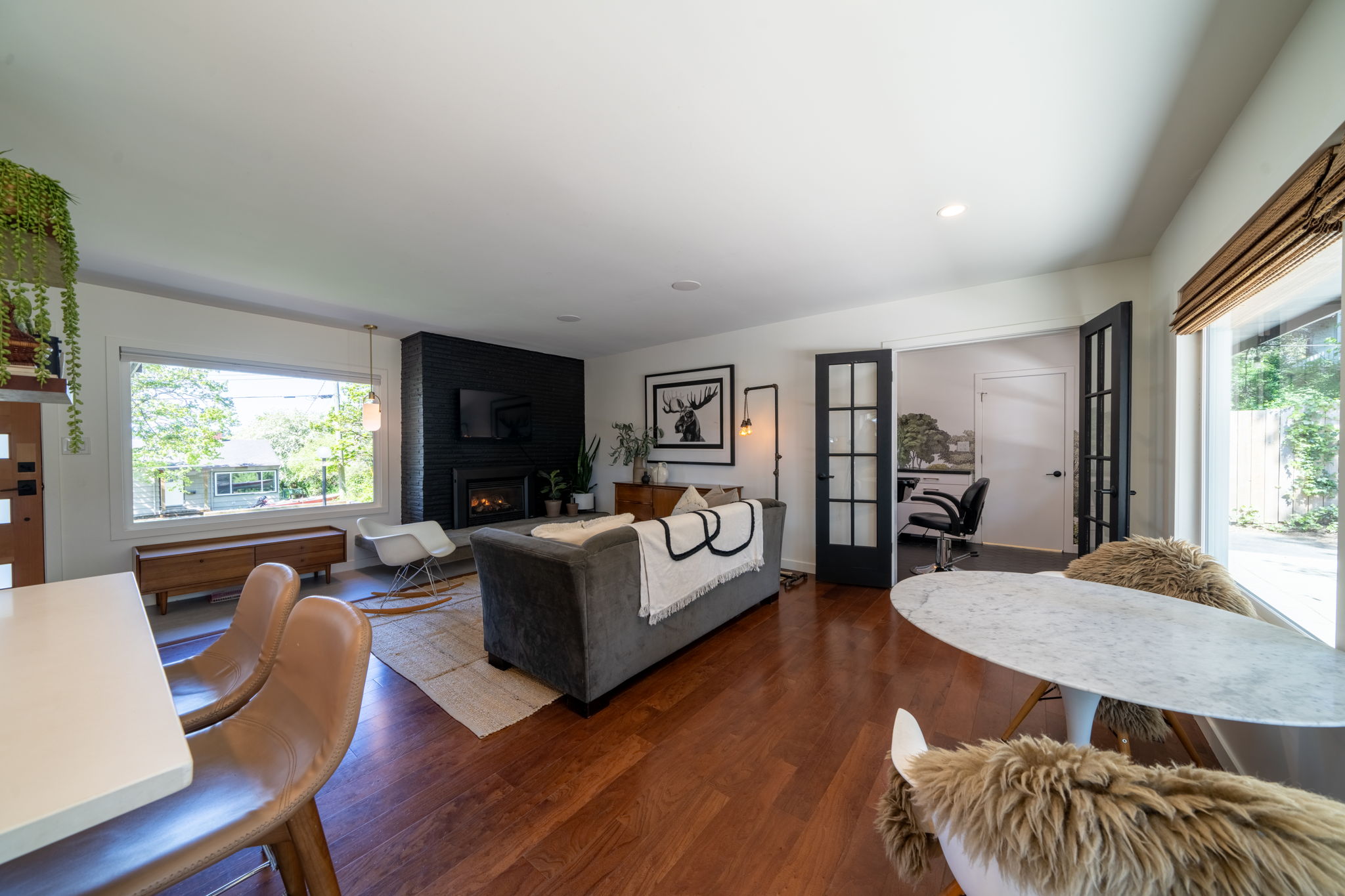
Buying a home with a suite in Victoria BC has become increasingly popular as buyers look for ways to offset housing costs, support multi-generational living, or create long-term investment opportunities. Secondary suites, in-law accommodations, and basement rentals appear frequently across Greater Victoria housing options. While suites offer strong advantages, buyers should also understand potential challenges before making a purchase decision. Rental Income Can Improve Affordability One of the biggest advantages of buying a home with a suite is the ability to generate rental income. Many buyers use suite revenue to offset mortgage payments, property taxes, and maintenance costs. Rental demand remains strong across Greater Victoria, particularly for well-located and properly finished suites. Lenders may also consider rental income when qualifying buyers for financing, which can increase purchasing power and expand available property options. Multi-Generational Living Flexibility Suites provide flexible housing arrangements for extended family members, aging parents, or adult children. This setup can reduce overall household expenses while allowing privacy and independence for both occupants. Many families value suites as long-term lifestyle solutions that adapt to changing housing needs. Increased Property Appeal and Resale Value Homes with legal or well-designed suites often attract broader buyer interest during resale. Investors, families, and buyers seeking mortgage assistance frequently prioritize these properties. In many Greater Victoria neighbourhoods, suites contribute to stronger resale demand and long-term property desirability. Legal and Zoning Considerations Matter Not all suites meet municipal zoning and building requirements. Buyers should confirm whether a suite qualifies as legal, authorized, or non-conforming. Legal suites typically meet current building codes, safety requirements, and zoning regulations, which can improve financing eligibility and resale confidence. Non-compliant suites may still generate income but can create insurance, financing, or enforcement risks. Buyers should review municipal records and permit history carefully before purchasing. Landlord Responsibilities and Tenant Management Owning a property with a suite introduces landlord responsibilities. Property owners must manage tenant screening, maintenance requests, and rental agreements. While many homeowners successfully manage tenants, others may find the additional responsibilities time-consuming or stressful. Understanding tenancy regulations, lease agreements, and dispute resolution processes helps homeowners manage rental relationships effectively. Privacy and Lifestyle Adjustments Sharing property space with tenants or extended family can affect privacy and daily routines. Separate entrances, soundproofing, and parking availability can influence overall living comfort. Buyers should evaluate suite design and layout to ensure it aligns with personal lifestyle preferences. Financing and Insurance Considerations Properties with suites sometimes require specialised financing and insurance policies. Lenders may evaluate suite legality, rental income stability, and property valuation differently than single occupancy homes. Insurance providers often require disclosure of rental activity and may adjust coverage accordingly. Working with experienced professionals helps buyers understand financial implications before finalising a purchase. Maintenance and Operating Costs While suites generate income, they can also increase maintenance requirements. Additional kitchens, bathrooms, and mechanical systems may require more frequent servicing and repair. Buyers should budget for ongoing operating costs and vacancy periods when evaluating long-term financial benefits. Weighing the Long-Term Investment Potential Buying a home with a suite in Victoria BC can provide strong financial and lifestyle advantages when managed carefully. Suites offer income flexibility, expanded living arrangements, and increased buyer appeal. However, responsibilities, legal compliance, and privacy considerations should factor into the decision-making process. While past performance does not dictate future results, properties with suites have historically remained attractive in Greater Victoria’s evolving housing market. If you are considering purchasing or selling a home with a suite, contact our team to review zoning regulations, rental potential, and available opportunities tailored to your real estate goals. Jeff C., 5-Star Review, via Google Cal and Scott are tremendous, made our home buying and selling experience a stress free engagement.. some of the key highlights from our experience with them are: - quick to communicate, lightning fast.. within minutes! - deep expertise in the greater Victoria real estate.. from neighborhood information, developer history, even carpentry/finishing … DEEP knowledge - super friendly and encouraging They were able to deliver in very tight circumstances and we are so thankful to have worked with them. Best one in GVR for sure” Faber Real Estate Group Royal LePage Coast Capital Realty 📞 250-244-3430 📧[email protected] ℹ️ Scott Faber Personal Real Estate Corporation ℹ️ Cal Faber Personal Real Estate Corporation Vanessa Wood, Zachary Parsons, and Sophie Taylor “Building Lasting Relationships, One Home at a Time.”
Read more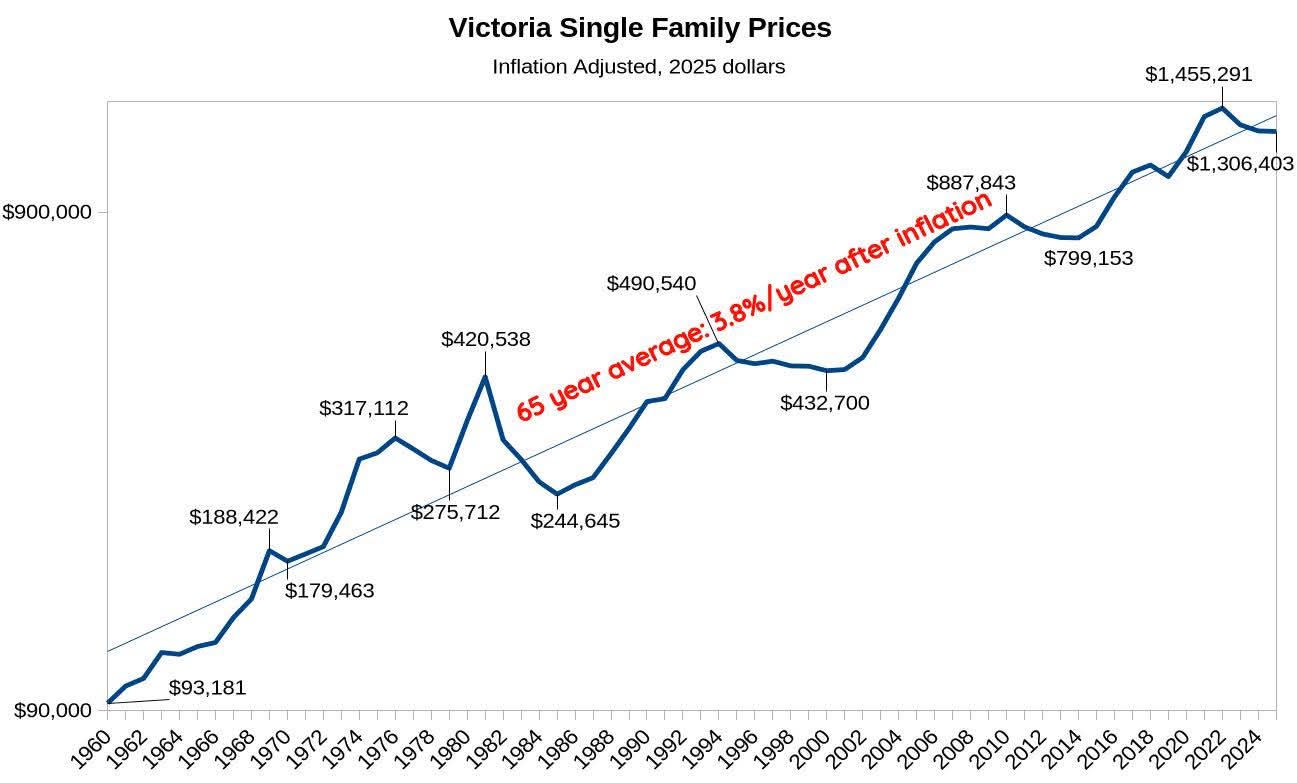
When we look at Victoria BC single-family home price inflation over the last five decades, the long-term trend shows steady growth in nominal prices that outpaces general inflation. While many narratives focus on the recent past, such as COVID, immigration, low interest rates, or specific crises, the evidence shows price inflation has been building over decades. Past performance does not dictate future results, and no single factor exclusively explains this trend. Early Growth: The 1970s and 1980s In the 1970s and early 1980s, Victoria’s housing market began a pattern of rising prices as the region’s economy grew, buoyed by stable government and service sector employment. Through the high interest rates of the early 1980s and the recession of the early 1990s, prices dipped at times but continued a long-term upward trajectory. Stabilization and Expansion: Mid-1990s to Early 2000s From the mid-1990s into the 2000s, demand increased with economic stability, limited developable land on the Peninsula, and relatively modest new supply. Nominal prices continued to rise gradually during this period. The 2008 global financial crisis slowed markets briefly, but there was no prolonged collapse as investors and local buyers still saw Victoria as a desirable place to live. Acceleration During the 2010s Entering the 2010s, prices accelerated markedly. Some attribute rapid price inflation solely to post-COVID dynamics or spikes in immigration. However, while these factors can influence short-term demand, the pattern of rising home values predates them by decades. Low interest rates after the 2008 crisis, provincial and national tax policies, and persistent supply constraints played roles, but none in isolation fully explain the long-term Victoria BC single family home price inflation. The COVID-19 Market Surge During and after the COVID-19 pandemic, many markets, including Victoria’s, saw sharper short-term increases. Still, this represents an amplification of pre-existing trends, not the beginning of them. Factors such as remote work and changing lifestyle preferences likely contributed to near-term demand swings, but research consistently shows that long-term price trends are influenced by multiple factors rather than a single event or policy. Multiple Forces Driving Long-Term Price Growth In reviewing 50 years of data, it is clear that demographics, economics, land supply, local planning policy, and broader macroeconomic conditions all interact. Narratives that claim the market rapidly escalated only after one event, such as COVID, high immigration, low rates, or a past financial crisis, are not fully supported by the evidence. These events influence the market, but long-term price inflation has been ongoing. Understanding Long-Term Housing Market Complexity Understanding Victoria BC single family home price inflation requires acknowledging the complexity of housing markets. While past performance does not dictate future results, long horizons help illustrate that price trends emerge from structural and cyclical influences over time. Lou N., 5-Star Review, via Google “Scott is a knowledgeable, professional, dedicated and thorough expert in his field. Excellent at what he does and we couldn't have found a better realtor to guide us through one of the most important decisions in our lives.” Faber Real Estate Group Royal LePage Coast Capital Realty 📞 250-244-3430 📧[email protected] ℹ️ Scott Faber Personal Real Estate Corporation ℹ️ Cal Faber Personal Real Estate Corporation Vanessa Wood, Zachary Parsons, and Sophie Taylor “Building Lasting Relationships, One Home at a Time.”
Read more
Buyer’s remorse is a common concern for homebuyers, especially in a market like Victoria, BC where prices remain high even in a balanced 2026 environment. Learning how to avoid buyer’s remorse in Victoria, BC starts with preparation, realistic expectations, and the right guidance. With more inventory available across the Westshore, Oak Bay, and Saanich, buyers now have the opportunity to make confident, well-considered decisions. Get Clear on Your Budget Before You Shop Financial stress is one of the biggest causes of buyer’s remorse. A mortgage pre-approval helps define your true price range and accounts for the stress test. It also locks in your rate for up to 120 days. To stay comfortable long-term: Shop 10 to 20 percent below your maximum approval Budget 1 to 4 percent of the home’s value annually for maintenance Plan for closing costs, which typically run 1.5 to 4 percent in Victoria This buffer gives you flexibility and peace of mind after possession day. Separate Must-Haves From Nice-to-Haves Emotion can creep in quickly during showings. Creating a clear list keeps decisions grounded. Focus on: Bedrooms and layout that fit your lifestyle Commute times and access to schools or transit Outdoor space, storage, or work-from-home needs Features like high-end finishes are appealing, but they should not outweigh long-term functionality. Research the Neighbourhood, Not Just the House Even a great home can lead to regret if the location does not fit your lifestyle. Visit the neighbourhood at different times of day and on weekends. Pay attention to noise, traffic, parking, and overall activity. In Victoria, each area offers a different feel. Fairfield, Langford, Colwood, and Oak Bay all appeal to different buyers. Understanding that difference helps you avoid buyer’s remorse after you move in. Never Skip the Inspection or Rush the Process A home inspection is essential, even in a competitive market. It can uncover issues that affect both your budget and your comfort in the home. Take time to: View the property more than once Ask detailed questions Bring in specialists for older or character homes when needed Rushing often leads to overlooked details and later regret. Work With Experienced Local Professionals A knowledgeable local REALTOR helps you spot red flags, understand value, and negotiate effectively. A good mortgage broker and real estate lawyer also play a critical role in reducing surprises. In a buyer-friendly 2026 market, you can afford to slow down and compare options. If something does not feel right, it is okay to walk away. Quick Tips to Avoid Buyer’s Remorse Get pre-approved early and respect your budget Prioritize needs over cosmetic upgrades Research neighbourhoods thoroughly Always complete a home inspection Take your time and trust the process Avoiding buyer’s remorse in Victoria, BC comes down to clarity, patience, and the right advice. Ready to buy with confidence? Contact us to discuss how these strategies can support your home search and help you feel good about your decision long after you move in. Wilson, 5-Star Review, via Google “Amazing people there! They will help you through the entire process and will always make you feel like family. For those first time home buyers, don't be intimidated entering the market because they will explain every process and guide you through.” Faber Real Estate Group Royal LePage Coast Capital Realty 📞 250-244-3430 📧[email protected] ℹ️ Scott Faber Personal Real Estate Corporation ℹ️ Cal Faber Personal Real Estate Corporation Vanessa Wood, Zachary Parsons, and Sophie Taylor “Building Lasting Relationships, One Home at a Time.”
Read more
BC real estate prices in 2026 continue to reflect a market shaped by structural pressures rather than short-term swings. While conditions are more balanced than past cycles, several forces still influence pricing across the province. Housing Supply Remains Tight New construction has not kept pace with population growth. Zoning changes help long-term supply, but short-term inventory remains limited, especially in urban and desirable lifestyle markets. Interest Rates and Buyer Behaviour Rate stability in 2026 has improved buyer confidence. While higher than historic lows, predictable borrowing costs allow buyers to plan, supporting steady demand rather than rapid price jumps. Population Growth and Migration Interprovincial and international migration continue to fuel housing demand. BC remains attractive for employment, education, and lifestyle, keeping pressure on prices in key regions. Regional Market Differences Not all markets move the same way. Urban centres show slower price growth, while secondary and lifestyle markets see more resilience due to relative affordability and limited listings. Long-Term Investment Outlook Many buyers view real estate as a long-term hold. This mindset reduces panic selling during slower periods and helps stabilize prices across market cycles. BC real estate prices in 2026 are driven less by speculation and more by fundamentals. Supply constraints, steady demand, and long-term ownership patterns continue to support values across the province. If you have any questions about real estate, feel free to reach out. Lisa S., 5-Star Review, via Google “Scott went above and beyond for us in both finding our dream home and selling our condo. He listened to us and provided professional advice for each circumstance. Would highly recommend!” Faber Real Estate Group Royal LePage Coast Capital Realty 📞 250-244-3430 📧[email protected] ℹ️ Scott Faber Personal Real Estate Corporation ℹ️ Cal Faber Personal Real Estate Corporation Vanessa Wood, Zachary Parsons, and Sophie Taylor “Building Lasting Relationships, One Home at a Time.”
Read more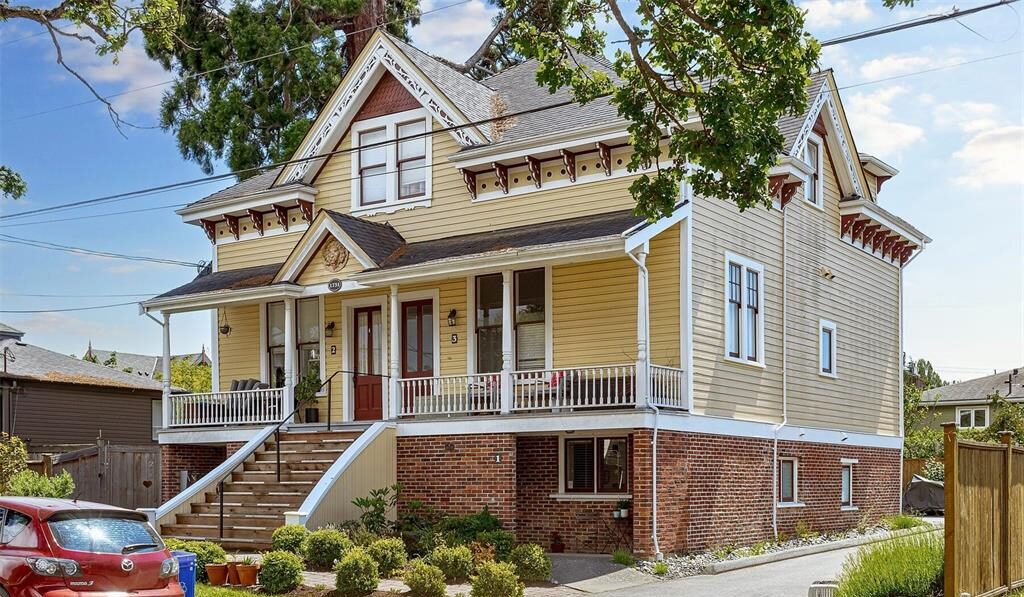
Vancouver Island assessed property values are now available, and many homeowners are asking what the numbers really mean. While assessments influence property taxes, they do not directly reflect current market value. Understanding how BC Assessment works helps put these figures into context. How BC Assessment Determines Value BC Assessment estimates property values annually based on a July 1 valuation date from the prior year. They analyze recent sales, property characteristics, location, and zoning. The goal is fairness across similar properties, not predicting today’s selling price. Why Total Assessed Values Reached $399 Billion Across British Columbia, total assessed property values climbed to approximately $399 billion. This increase reflects long-term population growth, limited housing supply in many areas, and steady demand over several years. Even in a more balanced market, past price gains still influence assessed values. Regional Differences Across Vancouver Island Changes were not uniform. In Greater Victoria, assessments rose by about 1 percent, signalling a cooler and more stable market compared to prior years. In contrast, parts of the North Island saw increases of up to 7 percent, driven by relative affordability, lifestyle demand, and fewer listings. These differences matter. Property taxes are based on your home’s value relative to others in your municipality, not just whether your assessment went up or down. What This Means for Homeowners in 2026 A higher assessment does not automatically mean higher taxes. If your property value increased less than the local average, your tax bill may rise only modestly. For buyers and sellers, assessed values remain a reference point, but market conditions, pricing strategy, and timing still matter more. If you believe your assessment does not reflect your property accurately, you can review comparable sales and file an appeal within the stated deadline. Bottom Line Vancouver Island assessed property values 2026 show a market that is stabilizing in some regions and still adjusting in others. Understanding the assessment process helps homeowners make informed decisions without overreacting to the headline number. Cindy H., 5-Star Review, via Google “The Faber team go above and beyond! Scott is wonderful to deal with and has a great attitude. I definitely recommend.” Faber Real Estate Group Royal LePage Coast Capital Realty 📞 250-244-3430 📧[email protected] ℹ️ Scott Faber Personal Real Estate Corporation ℹ️ Cal Faber Personal Real Estate Corporation Vanessa Wood, Zachary Parsons, and Sophie Taylor “Building Lasting Relationships, One Home at a Time.”
Read more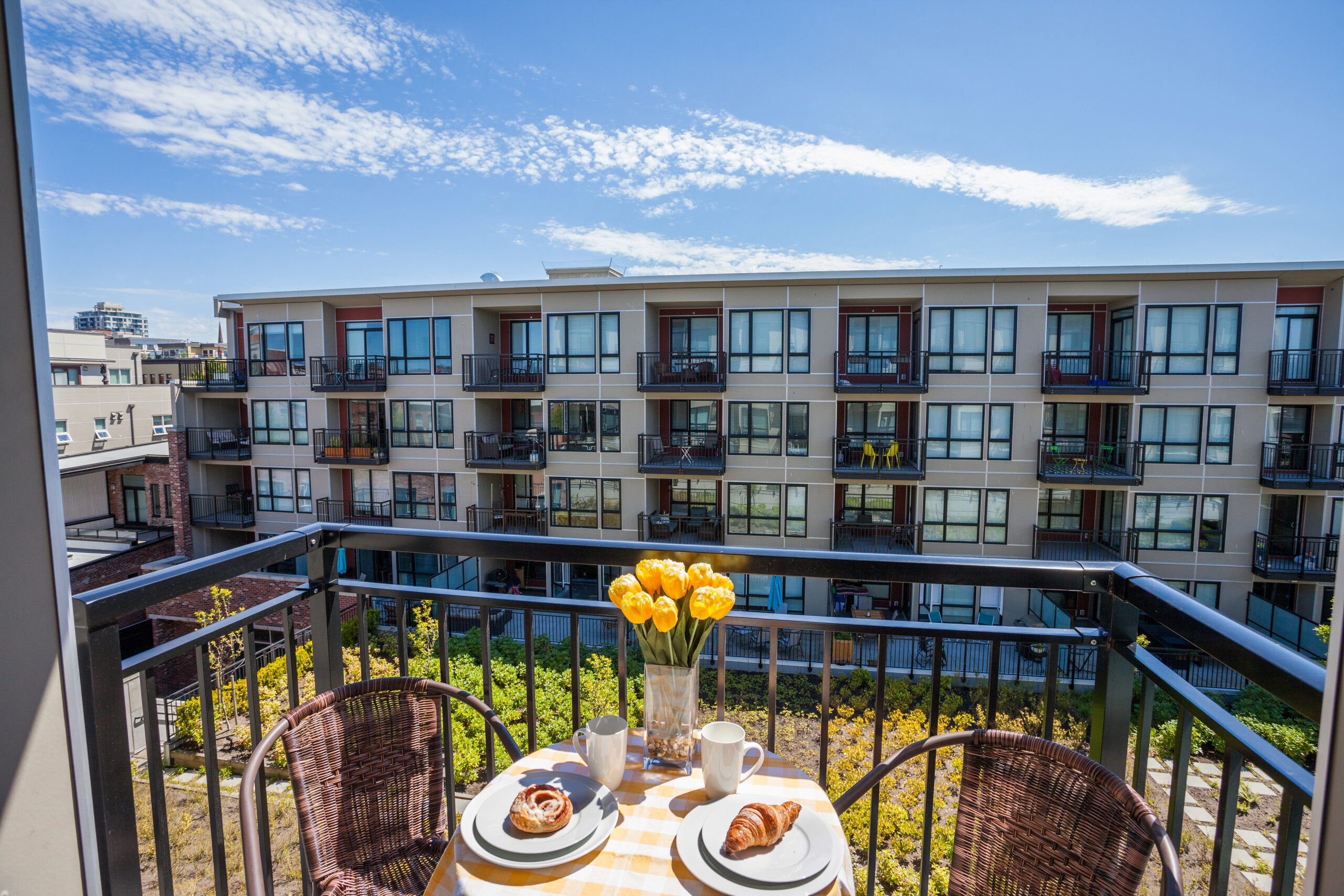
The 2026 Greater Victoria real estate market entered the year in a noticeably more balanced position. Inventory is higher year-over-year, sales remain seasonally soft, and prices are largely stable, with variation by neighbourhood and property type. Buyers have real choice again. Sellers who price realistically are still seeing solid outcomes. January 2026 Snapshot (VREB) Sales: 339 properties sold region-wide 19.7% fewer than January 2025 7.6% fewer than December 2025, consistent with winter trends Active Listings: 2,624 at month-end Up 3.1% from December Up 9.6% year-over-year Market Balance: Sitting on the line between balanced and buyer-friendly, depending on the neighbourhood Benchmark Prices at a Glance Victoria Core Single-family: $1,265,500 Down 2.5% year-over-year Slight uptick from December, signalling price stability Condos: $537,800 Down 1.5% year-over-year The most stable segment in the market Westshore Single-family benchmarks are not broken out monthly Langford, Colwood, and View Royal posted modest gains through 2025 Relative affordability and newer housing stock continue to support demand Saanich (East & West) Generally stable pricing Family-oriented neighbourhoods like Gordon Head, Broadmead, and Royal Oak are holding value well Data source: VREB MLS® Home Price Index, February 2026 release What This Means So Far The broader trend from 2025 into early 2026 is clear. Core Victoria single-family homes softened modestly over the past year. The Westshore posted small gains, supported by family demand and newer inventory. Saanich continues to act as the steady middle ground. What Buyers Can Expect in 2026 More selection, especially early in the yearInventory levels are the highest seen in several years. Expect more choice and slightly longer days on market across most areas. Stable pricing with room to negotiateCore Victoria single-family benchmarks are holding in the $1.25M to $1.3M range. The Westshore continues to offer the best value for buyers seeking detached homes. Condos remain buyer-friendlyCondos are still the most accessible entry point for first-time buyers and downsizers, with stable pricing and ample selection. Westshore continues to lead for growth and valueLangford, Colwood, View Royal, Westhills, and Royal Bay offer newer builds, family amenities, and long-term upside. Saanich delivers lifestyle and schoolsNeighbourhoods like Gordon Head, Cadboro Bay, Broadmead, and Royal Oak continue to command premiums. Inventory is tighter, so well-prepared homes still sell quickly when priced correctly. Rates and external factors matter, but less dramaticallyMortgage rate stability or modest Bank of Canada cuts would support confidence. The market has returned to normal seasonal patterns rather than urgency-driven behaviour. Bottom Line for 2026 The 2026 Greater Victoria real estate market is healthy and sustainable. Buyers have more choice than at any point since 2021, prices are not falling sharply, and demand remains steady in well-located neighbourhoods. If you are planning to buy this year, the first half of 2026 offers one of the strongest windows we have seen in recent years, particularly in the Westshore and select areas of Saanich. If you would like to discuss your options or explore opportunities in your target neighbourhood, feel free to reach out anytime. Noel A., 5-Star Review, via Google “My partner and I had a great experience with Scott and the Fabers with our first home purchase. Scott answered all questions we had and helped guide us to make the right purchase that fit our lifestyle. Would highly recommend the Fabers!” Faber Real Estate Group Royal LePage Coast Capital Realty 📞 250-244-3430 📧[email protected] ℹ️ Scott Faber Personal Real Estate Corporation ℹ️ Cal Faber Personal Real Estate Corporation Vanessa Wood, Zachary Parsons, and Sophie Taylor “Building Lasting Relationships, One Home at a Time.”
Read more
The Sidney BC housing market outlook points to stability rather than sharp swings. Current assessments suggest modest value increases of roughly 2 to 3 percent for both single-family homes and condos, reflecting steady demand in this coastal community. Why Assessed Values Are Rising Slowly Sidney’s housing stock is mature and largely built out. Limited new supply helps support values, but a balanced resale market keeps growth measured. For 2026, modest assessment increases signal a market that is healthy, not overheated. Coastal Appeal Drives Consistent Demand Sidney’s waterfront setting, walkable downtown, and proximity to the airport and ferries continue to attract buyers. Retirees, downsizers, and lifestyle-focused purchasers remain active, which helps sustain demand even during broader economic shifts. Condos and Single-Family Homes Stay Aligned Both housing types are seeing similar assessment trends. Condos remain popular with downsizers and part-time residents, while single-family homes benefit from limited inventory and long-term ownership patterns. What This Means for Homeowners and Buyers A 2 to 3 percent assessed value increase does not automatically mean higher property taxes. Taxes depend on how your home compares to others locally. For buyers, Sidney offers predictability and long-term value rather than rapid appreciation. Bottom Line The Sidney, BC housing market outlook suggests modest value gains supported by lifestyle demand and limited supply. For homeowners and buyers alike, Sidney continues to offer stability in a changing market. Don S., 5-Star Review, via Google “I would recommend them to anyone buying real estate on the Vancouver Island. The team is very knowledgeable, courteous and professional, adding a personal touch to building a strong relationship.” Faber Real Estate Group Royal LePage Coast Capital Realty 📞 250-244-3430 📧[email protected] ℹ️ Scott Faber Personal Real Estate Corporation ℹ️ Cal Faber Personal Real Estate Corporation Vanessa Wood, Zachary Parsons, and Sophie Taylor “Building Lasting Relationships, One Home at a Time.”
Read more
The Bank of Canada has held the overnight rate steady. For homeowners with fixed or variable mortgages, this means there is no immediate change to monthly payments. However, the decision itself offers important insight into where interest rates may be headed in 2026. In a balanced market like Greater Victoria, understanding the signal behind the pause matters just as much as the rate itself. What This Announcement Really Signals Holding rates suggests the Bank believes current policy is restrictive enough to cool inflation without further tightening. Instead of reacting aggressively, the Bank is choosing to wait and assess how past rate hikes continue to work through the economy. For buyers and homeowners, this points to a shift from rate shock to rate stability. Why Inflation Is No Longer Forcing the Bank’s Hand Inflation has eased from its peak and is moving closer to the Bank’s target range. While prices are still elevated in some areas, broad inflation pressures are no longer accelerating. Because of this, the Bank does not need to raise rates further to regain control. That does not guarantee cuts are imminent, but it reduces the risk of sudden increases. What Could Actually Move Rates This Year Future rate changes will likely depend on a few key factors: Sustained declines in inflation Slower economic growth or rising unemployment Weak consumer spending and housing activity If inflation continues to cool without a rebound in demand, gradual rate cuts later in 2026 become more likely. On the other hand, renewed inflation pressure or economic surprises could delay that timeline. How Buyers and Homeowners Should Think About Risk For current homeowners, stability offers a chance to review renewal timelines, stress test household budgets, and avoid overextending in anticipation of rapid rate cuts. For buyers, this environment supports careful planning. Rate holds reduce urgency, but affordability still matters. Buyers should focus on long-term payment comfort rather than timing short-term rate moves. In markets like Victoria, where inventory remains higher and prices are stable, patience and flexibility continue to be advantages. Bottom Line The Bank of Canada holding rates steady does not change payments today, but it signals a more measured phase of monetary policy. Inflation is no longer driving aggressive action, and future moves will depend on how the economy evolves through 2026. If you are weighing your options as a buyer or homeowner, now is a good time to review your strategy and understand how interest rate risk fits into your plans. Ready to talk through your next move? Contact us to discuss how today’s rate environment impacts your home search or long-term goals. Dione S., 5-Star Review, via Google “We made a MAJOR purchase and his expertise gave us the confidence to make OUR own decision in this crazy market! We are HAPPY ! Would not change a thing! Thank you Faber team!!” Faber Real Estate Group Royal LePage Coast Capital Realty 📞 250-244-3430 📧[email protected] ℹ️ Scott Faber Personal Real Estate Corporation ℹ️ Cal Faber Personal Real Estate Corporation Vanessa Wood, Zachary Parsons, and Sophie Taylor “Building Lasting Relationships, One Home at a Time.”
Read more
When people think about living in Victoria BC, the focus often starts with home prices and market conditions. While those factors matter, they only tell part of the story. What truly sets Victoria apart is the lifestyle that comes with it. From easy access to nature to a strong sense of community, Victoria offers daily benefits that go far beyond real estate. In a stable 2026 market, these lifestyle factors continue to influence why people choose to settle here long-term. Parks and Green Spaces That Shape Daily Life One of the biggest lifestyle advantages of living in Victoria BC is the access to green space. With more than 200 parks across the region, nature is never far from home. Beacon Hill Park remains a standout, offering walking paths, gardens, and open space right near downtown. It is a go-to spot for morning walks, weekend picnics, and family time. For those looking for elevation and views, Mount Douglas Park provides scenic trails overlooking the city and coastline. These parks do more than enhance scenery. They encourage outdoor activity, support mental well-being, and create natural gathering spaces where neighbours connect. In communities like Oak Bay and Saanich, parks often feel like an extension of the neighbourhood itself. Trails That Connect the City Beyond parks, Victoria’s trail network plays a major role in everyday life. The Galloping Goose Regional Trail is a key highlight, stretching from downtown to the Westshore and beyond. This multi-use trail supports cycling, walking, and commuting without a car. Many residents use it daily, whether for exercise or to get to work. Its connections to other routes, including the Lochside Trail, make it easy to travel across the region while staying active. For Westshore residents in Langford and Colwood, the trail offers a practical alternative to traffic. Combined with Victoria’s mild climate, these trails remain usable year-round, adding to the appeal of outdoor living. Community Events and Local Culture Victoria’s lifestyle is also shaped by its active community and year-round events. Seasonal festivals, local markets, and neighbourhood gatherings help create a strong sense of belonging. Events like the Victoria Fringe Festival and Rifflandia continue to attract both locals and visitors. Weekly farmers’ markets in areas such as James Bay and Moss Street support local businesses while offering fresh, regional food. Even outside major festivals, smaller community events keep neighbourhoods connected. These experiences help newcomers feel at home quickly and give long-time residents reasons to stay engaged. Why Victoria Feels Like Home What often stands out most about living in Victoria BC is the balance it offers. The city combines small-community charm with urban amenities, including strong schools, growing employment sectors, and reliable transit. Victoria’s mild climate supports an outdoor lifestyle year-round, which many residents consider a major quality-of-life advantage. Combined with a reputation for safety and walkability, it appeals to families, professionals, and retirees alike. In a 2026 market marked by stable prices and increased inventory, buying in Victoria is about more than timing the market. It is about choosing a place that supports how you want to live. If you are considering a move, the lifestyle benefits of Victoria may be just as important as the numbers. Living here means investing in daily quality of life, not just real estate value. Gigi S., 5-Star Review, via Google “Scott and his team is highly professional group . Scott is a very friendly person ,care for needs and requirements of his client . He makes sure that the property you are buying is your dream place and where you would like to see yourself staying forever . I'm glad that we found such a great realtor.” Faber Real Estate Group Royal LePage Coast Capital Realty 📞 250-244-3430 📧[email protected] ℹ️ Scott Faber Personal Real Estate Corporation ℹ️ Cal Faber Personal Real Estate Corporation Vanessa Wood, Zachary Parsons, and Sophie Taylor “Building Lasting Relationships, One Home at a Time.”
Read more
Victoria BC zoning laws play a major role in how properties can be used, renovated, or redeveloped. If you are buying or selling in Victoria, understanding zoning helps you avoid surprises and identify long-term opportunities. At its core, zoning shapes how neighbourhoods evolve over time. These rules determine not only what exists today, but also what may be possible in the future, making zoning knowledge especially valuable in a changing market. What Zoning Laws Do To manage growth and land use, zoning laws set clear parameters for development. They outline how land can be used and what can be built, helping balance housing needs with neighbourhood character. Specifically, zoning bylaws divide land into defined categories. Each zone establishes rules around permitted uses, building height, density, setbacks, and parking. Some zones allow only detached homes, while others permit duplexes, townhomes, or small multi-unit buildings. In Victoria, these rules are governed through the Zoning Bylaw 2018 alongside the older Zoning Regulation Bylaw. Together, they apply to residential, commercial, and mixed-use areas across the city. Main Zoning Types in Victoria Understanding the main zoning categories helps clarify what is allowed in different areas of the city. Residential zones cover single-family homes, multi-family housing, and mixed residential uses. Recent updates have focused on increasing density through small-scale multi-unit housing rather than high-rise development. Beyond residential areas, commercial zones allow retail, offices, and services, often combined with residential units in central locations. Industrial zones support manufacturing and warehouse uses and are typically located away from residential neighbourhoods. There are also special zones for institutional, agricultural, and park-related uses. Recent Zoning Changes to Know In recent years, provincial housing policies have significantly reshaped Victoria BC zoning laws for 2026. Many lots that once allowed only one home now permit up to four or six units, depending on lot size and proximity to transit. These changes are designed to increase housing supply while maintaining livable communities. As a result, zoning in Victoria’s core now encourages infill and gentle density. In contrast, growing areas closer to the Westshore are seeing zoning that supports larger developments and transit-oriented housing. How Zoning Affects Buyers and Sellers These zoning rules have practical implications for buyers, sellers, and investors. For buyers, zoning determines future options such as adding a suite or building additional units. For sellers, more flexible zoning can increase buyer interest and perceived value. From an investment perspective, zoning directly influences rental potential, redevelopment feasibility, and long-term returns. Because of this, zoning should always be reviewed early in the decision-making process. Before moving forward, confirm zoning details with the City of Victoria, especially if future development or expansion is part of your plan. Bottom Line Victoria BC zoning laws are designed to support growth while balancing community needs. Understanding how zoning works gives buyers, sellers, and investors a clearer picture of what a property can offer today and what it may offer in the future. This information is for educational purposes only. Always verify zoning with the City of Victoria before proceeding. Shane B., 5-Star Review, via Google “The last few months navigating this crazy real estate market has been a rollercoaster, and we couldn’t have done it without the Faber Real Estate Team! Scott was extremely helpful, positive and always available. Under a tight timeline we were able to get our condo on the market and sell right away, to be available for any housing opportunity. Scott was patient and helpful throughout the entire process of searching for houses, and went above and beyond to help us finally land an accepted offer on the perfect home. Thank you Scott and the Faber Real Estate Team!” Faber Real Estate Group Royal LePage Coast Capital Realty 📞 250-244-3430 📧[email protected] ℹ️ Scott Faber Personal Real Estate Corporation ℹ️ Cal Faber Personal Real Estate Corporation Vanessa Wood, Zachary Parsons, and Sophie Taylor “Building Lasting Relationships, One Home at a Time.”
Read more