


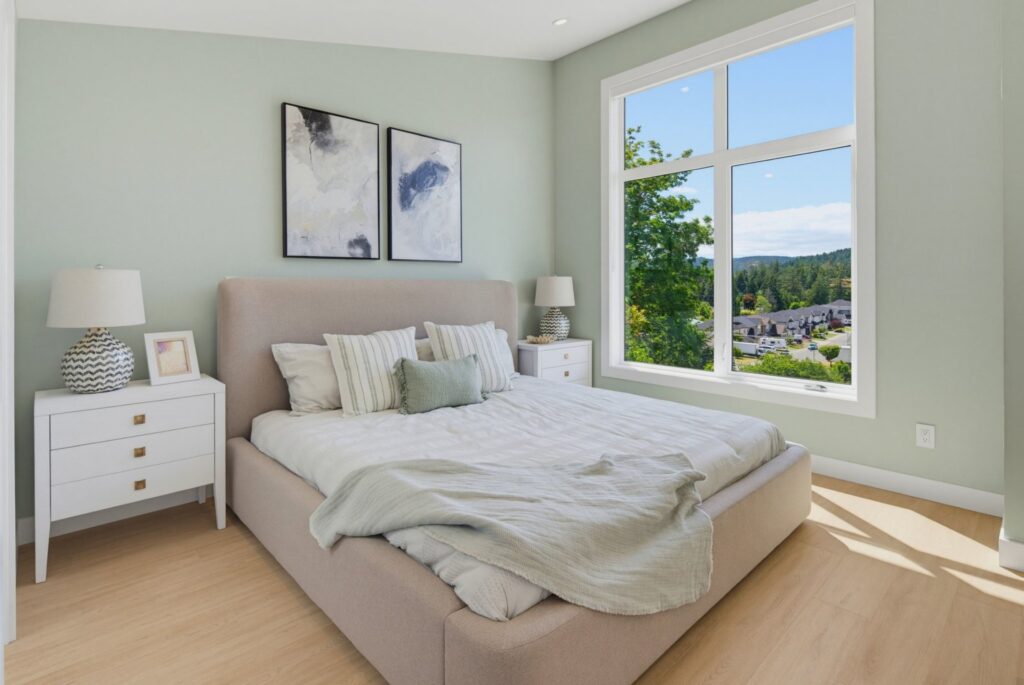
When buyers compare homes, they usually focus on price, location, square footage, and condition. However, home orientation matters more than many buyers realize because it can affect natural light, indoor temperature, outdoor space, privacy, and how the home feels throughout the day.
Two nearly identical homes can offer very different living experiences simply because one faces a different direction.
Orientation is not necessarily something buyers should rank above every other feature. Still, understanding it can help explain why one home feels brighter, cooler, warmer, or more inviting than another.
The Short Answer
Home orientation affects how sunlight moves through a property throughout the day.
Generally:
- East-facing spaces receive more morning sun
- West-facing spaces receive stronger afternoon and evening sun
- South-facing spaces tend to receive more direct sunlight throughout the day
- North-facing spaces often receive softer, more indirect light
However, orientation is only part of the picture.
Trees, neighbouring buildings, floor level, window placement, balconies, roof overhangs, and surrounding terrain can all change how much sunlight actually reaches a home.
South-Facing Does Not Automatically Mean Better
South-facing exposure is often treated as a premium feature because it can provide strong natural light for much of the day.
For some buyers, that is exactly what they want.
A bright living room can feel more open, while a sunny patio or backyard may become more usable during cooler months.
However, more sunlight can also mean more heat during the summer.
Large south-facing windows may increase indoor temperatures, particularly if the home has limited shading or no air conditioning.
Therefore, the better question is not whether south-facing is best.
It is whether that exposure fits the way you want to live.
East-Facing Homes Can Be Great for Morning Light
East-facing rooms receive their strongest light earlier in the day.
That can work particularly well for kitchens, breakfast areas, bedrooms, or patios used in the morning.
By afternoon, those spaces may become cooler and more shaded.
As a result, east exposure can appeal to buyers who enjoy bright mornings but prefer less intense afternoon heat.
On the other hand, someone who spends most of the day away from home may rarely enjoy the strongest natural light the property receives.
Lifestyle matters just as much as direction.
West-Facing Exposure Can Change the Evening Experience
West-facing homes receive more afternoon and evening sun.
For buyers who spend evenings on a balcony, patio, or deck, that can be a significant lifestyle benefit.
It can also make living spaces feel brighter later in the day.
However, west exposure may bring more heat during summer afternoons, especially in condos with large glass walls or limited airflow.
Before deciding whether that is a positive or negative, consider how the space will be used and whether the home has blinds, air conditioning, exterior shading, or good ventilation.
North-Facing Does Not Mean Dark
North-facing properties are sometimes dismissed too quickly.
Although they may receive less direct sunlight, they can still have excellent natural light.
Large windows, higher ceilings, an open layout, lighter interior finishes, and fewer obstructions can make a north-facing home feel bright.
Meanwhile, the softer light can also reduce glare and overheating.
This is particularly useful for home offices, artwork, or rooms where consistent light is more desirable than strong direct sun.
In other words, direction alone does not determine whether a home feels bright.
Orientation Matters Even More in Condos
For condo buyers, orientation can have an outsized effect because the unit may only have windows on one or two sides.
A corner unit with exposure in multiple directions can receive light at different times of day.
By comparison, an interior unit may depend almost entirely on one exposure.
Floor level matters too.
A south-facing condo on a lower floor could receive less sunlight if another building sits directly across from it. Meanwhile, a north-facing unit higher in the building may have wide-open views and excellent natural light.
That is why buyers should evaluate the actual unit rather than relying on the compass direction alone.
Our article on Why Floor Plan Matters More Than Square Footage looks at another factor that can dramatically change how a condo or home feels despite what the listing specifications say.
Think About Outdoor Space Too
Orientation matters outside the home as well.
A backyard, balcony, patio, or deck can feel completely different depending on when it receives sunlight.
Consider when you expect to use the space.
Morning coffee might make east exposure appealing.
Evening dinners may make west exposure more attractive.
Meanwhile, buyers who enjoy gardening may care about how much direct sunlight reaches different parts of the property throughout the day.
A large outdoor space is valuable, but its orientation can determine how often you actually want to use it.
Trees and Nearby Buildings Can Matter More Than Direction
Compass direction should never be considered in isolation.
A south-facing backyard surrounded by mature trees may receive less direct sunlight than expected.
Similarly, a condo facing west could have most of its afternoon sun blocked by another tower.
Before buying, look at:
- Nearby buildings
- Mature trees
- Hills and terrain
- Balcony overhangs
- Window size
- Floor level
- Seasonal sun angles
- Future development nearby
These details can have just as much impact as the direction listed on a floor plan.
Consider Future Development
Today’s view and sunlight may not always remain the same.
A vacant lot, surface parking area, or low-rise building nearby could eventually be redeveloped.
For condo buyers in particular, future construction could affect views, privacy, natural light, and the feel of an outdoor space.
That does not mean buyers should avoid areas experiencing development.
Instead, it is another reason to understand the surroundings before making a decision.
Orientation Can Affect Privacy
Windows and outdoor spaces do more than bring in sunlight.
They also determine what you look toward.
A balcony facing an open park may feel very different from one facing directly into another building.
Likewise, bedroom windows that overlook neighbouring homes may require blinds more often, reducing some of the natural light buyers expected to enjoy.
Therefore, orientation should be considered alongside sightlines and privacy.
Visit at Different Times of Day When Possible
A home can feel very different at 10:00 a.m. than it does at 5:00 p.m.
If orientation is important to you, a second viewing at another time of day can provide useful information.
Notice:
- Which rooms receive direct sunlight
- Where glare appears
- Whether the home feels warm
- How bright interior rooms are
- How much privacy you have
- Whether the patio or balcony feels comfortable
Photos and listing descriptions cannot always capture those differences.
Seeing the property at another time can.
Could Orientation Affect Resale?
Orientation can influence resale, but it should not be viewed as a simple formula.
Some buyers actively seek south-facing outdoor space or west-facing views. Others prioritize cooler rooms, privacy, or morning light.
As a result, desirable orientation depends partly on the property itself and the buyer pool.
A strong view, functional layout, useful outdoor space, natural light, and privacy can all strengthen appeal.
Orientation contributes to those features, but rarely acts alone.
Compare How the Home Actually Feels
When home orientation matters to your decision, use the compass direction as a starting point rather than the conclusion.
Ask:
When Will We Be Home?
Morning, daytime, and evening routines can change which exposure feels best.
Which Rooms Receive the Best Light?
A sunny secondary bedroom may matter less if the living room stays dark all day.
Will the Home Get Too Warm?
Think about glazing, shading, airflow, and cooling.
Does the Outdoor Space Work When We Would Use It?
A patio’s size only tells part of the story.
What Surrounds the Property?
Nearby buildings, trees, and future development may alter light and privacy.
Final Thoughts
Home orientation may seem like a minor detail when you first start looking at properties.
In reality, it can influence how the home feels every day.
Natural light, temperature, outdoor usability, privacy, and even furniture placement can all be affected by exposure.
Still, there is no single direction that works best for every buyer.
The right orientation depends on the property, the surroundings, and the way you plan to live in the home.
When comparing two otherwise similar properties, paying attention to where the sun comes from may reveal a difference that square footage and listing photos never will.
Considering two homes with different exposures? Faber Real Estate Group can help you compare orientation, layout, surroundings, future development, and the practical details that can affect how each property feels long after the showing is over.
Michael F., 5-Star Review, via Google
“Cal and Scott exceeded our expectations in every way. They were always available to answer our questions and address any concerns immediately, providing exceptional support throughout the entire process. Their dedication and expertise made the selling and buying experience seamless and stress-free.”
Faber Real Estate Group
Royal LePage Coast Capital Realty
📞 250-244-3430
📧 scott@fabergroup.ca
ℹ️ Scott Faber Personal Real Estate Corporation
ℹ️ Cal Faber Personal Real Estate Corporation
Vanessa Wood, Zachary Parsons, and Sophie Taylor
“Building Lasting Relationships, One Home at a Time.”


