
Posts Tagged ‘new construction homes BC’
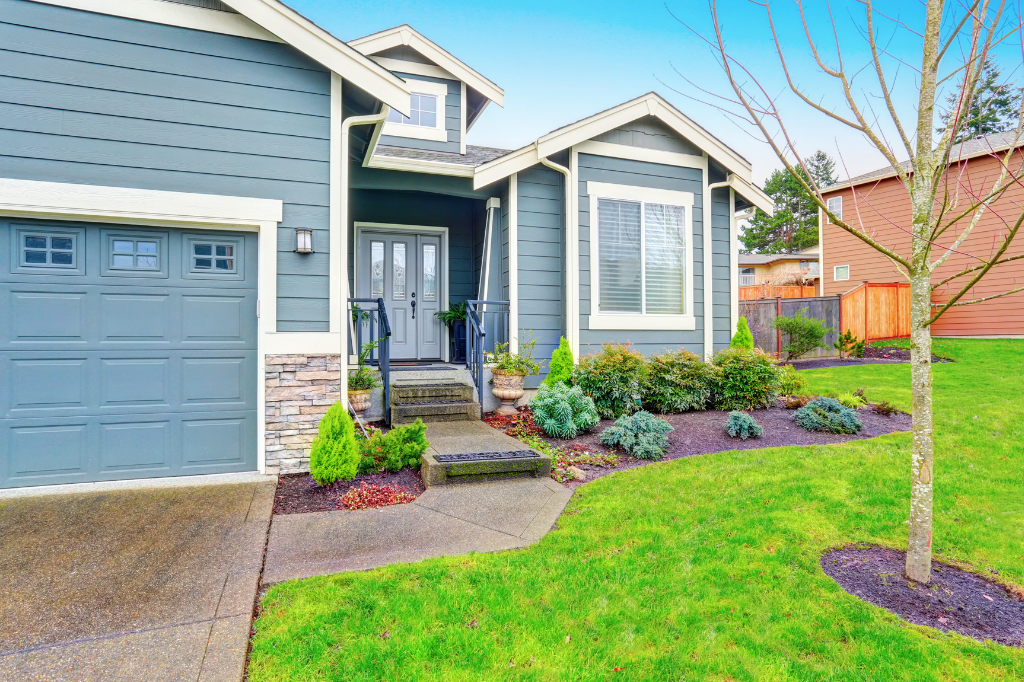
The GST rebate on new homes can make a meaningful difference for eligible first-time buyers, especially when comparing new condos, townhomes, and detached homes in Greater Victoria. The key is not just whether a property qualifies. It is where the rebate has the greatest practical impact on affordability, monthly comfort, and long-term fit. For eligible first-time buyers, the First-Time Home Buyers’ GST/HST Rebate can remove the federal GST on qualifying new homes valued up to $1 million, with a reduced rebate available between $1 million and $1.5 million. The maximum potential federal GST savings is $50,000. Canada’s Bill C-4 received Royal Assent on March 12, 2026, and the CRA notes that qualifying purchase agreements generally need to be entered into with the builder on or after March 20, 2025, and before 2031. Why the Rebate Changes the New Construction Conversation Buying new construction often feels different from buying resale. The price may include GST, the completion timeline may be months away, and buyers need to understand deposits, strata fees, warranty coverage, and what is included in the purchase price. The GST rebate on new homes matters because it can reduce one of the biggest added costs of buying new. For some buyers, that may improve the budget enough to stay in a preferred location. For others, it may help them choose a better floorplan, add parking, or keep more cash available after completion. Still, the rebate should not be the only reason to buy. A lower tax cost helps, but the right property still needs to fit your lifestyle, budget, and resale outlook. Where It Helps Most: New Condos For many first-time buyers in Greater Victoria, new condos may see the clearest benefit from the GST rebate. That is because condos are more likely to fall within the price range where the full rebate can apply. In a market where many buyers are trying to balance affordability with location, the rebate may help make a new condo more competitive against a resale option. New condos may be especially appealing when buyers want: Lower maintenance responsibilities A more walkable location Newer building systems Warranty protection Predictable finishes and modern layouts Access to entry-level ownership without taking on a larger detached home budget The trade-off is space. A condo may offer the strongest tax benefit, but buyers still need to think carefully about storage, parking, strata fees, rental bylaws, pet rules, and long-term livability. Where It Helps Differently: New Townhomes Townhomes often sit in the middle of the conversation. They may offer more space than a condo, but still avoid some of the cost and upkeep of a detached home. This is where the rebate can be useful, but buyers need to watch the price point closely. In some Greater Victoria neighbourhoods, new townhomes may fall under the $1 million mark. In others, they may move into the phase-out range, where the rebate becomes smaller. A new townhome may be a strong fit for buyers who want: More bedrooms or flexible work-from-home space Direct outdoor space A family-friendly layout Less maintenance than a detached home A longer ownership runway For many buyers, this is where the GST rebate can support a better lifestyle choice. The rebate may not always be as clean or complete as it is on a lower-priced condo, but it can still help reduce the gap between “we can afford it” and “this actually works for our next stage of life.” Where It Helps Least: New Detached Homes New detached homes can still benefit from the GST rebate, but this is often where the math becomes more limited. In Greater Victoria, new detached homes are more likely to exceed the $1 million threshold. Once the price moves between $1 million and $1.5 million, the rebate starts to phase out. At $1.5 million and above, the First-Time Home Buyers’ GST/HST Rebate no longer applies. That does not mean new detached homes are the wrong choice. It simply means the rebate may have less influence on the decision. A new detached home may still make sense for buyers who value: More land More privacy Long-term family space Suite potential, where permitted Fewer shared property decisions A longer-term ownership plan The key is to avoid overvaluing the rebate. If the home is already above the strongest rebate range, the decision should lean more on location, carrying costs, future flexibility, and resale strength. A Simple Way to Compare the Three Options The rebate helps most when the home price stays within the strongest eligibility range and the property still meets the buyer’s real needs. In practical terms: New condos may offer the clearest affordability boost. New townhomes may offer the best balance of space and savings. New detached homes may offer the most lifestyle flexibility, but often receive less rebate benefit due to higher pricing. That makes the “best” choice less about property type and more about fit. A condo with the full GST rebate may still be the wrong purchase if it feels too small within two years. A townhome with a partial rebate may be the smarter long-term move if it prevents an early resale. A detached home with little or no rebate may still be the right choice if the buyer has the budget and wants long-term stability. What Buyers Should Confirm Before Relying on the Rebate Before making a decision, buyers should confirm the details carefully with the builder, accountant, mortgage broker, and legal advisor where appropriate. Important questions include: Is GST included in the advertised purchase price? Will the rebate be credited by the builder or claimed after completion? Does the buyer meet the first-time buyer eligibility rules? Is the home intended as a primary residence? Does the agreement date qualify? Is the price within the full rebate, partial rebate, or no rebate range? How does the rebate affect the deposit, mortgage approval, and completion funds? The CRA notes that the rebate can apply in addition to the existing GST/HST new housing rebate where both apply, with the First-Time Home Buyers’ GST/HST Rebate acting as a top-up. The Bigger Picture for Greater Victoria Buyers The GST rebate on new homes can be valuable, but it should support the buying decision, not lead it. For first-time buyers in Greater Victoria, the bigger question is usually this: Does the home still make sense without the rebate? If the answer is yes, the rebate can be a helpful bonus. If the answer is no, the savings may be covering up a poor fit. Buyers still need to think about monthly payments, strata fees, closing costs, commute patterns, lifestyle needs, and how long the home is likely to work for them. The strongest purchase is not always the one with the biggest rebate. It is the one that balances savings, suitability, and long-term confidence. For buyers comparing new condos, townhomes, or detached homes in Greater Victoria, Faber Real Estate Group can help you understand where the GST rebate may help, how each property type compares, and what questions to ask before committing to a new construction purchase. Christina A., 5-Star Review, via Google “We had such a great experience working with Scott Faber during our recent home buying! From the start, Scott made everything super easy and was always there to answer our questions. Scott really listened to what we wanted and helped us find the perfect place. What we appreciated most was how down-to-earth and approachable he was. No matter what came up, Scott was on top of it and kept us in the loop the whole time. We felt like we were in great hands the entire process.” Faber Real Estate Group Royal LePage Coast Capital Realty 📞 250-244-3430 📧 [email protected] ℹ️ Scott Faber Personal Real Estate Corporation ℹ️ Cal Faber Personal Real Estate Corporation Vanessa Wood, Zachary Parsons, and Sophie Taylor “Building Lasting Relationships, One Home at a Time.”
Read more
Buying your first home in BC is already a big financial and emotional decision. The new federal GST rebate has created real opportunity for first-time buyers, but it also creates room for confusion. That is where costly assumptions can happen. For many buyers, the headline is exciting: eligible first-time buyers can recover up to 100% of the GST on new homes priced at or below $1 million, with a reduced rebate available between $1 million and $1.5 million, and no rebate at $1.5 million or more. The legislation received Royal Assent on March 12, 2026, and the CRA has now published application guidance. The problem is simple. Many buyers hear “GST rebate” and assume it applies automatically, applies to every property type, or applies no matter how the purchase is structured. It does not. Here are some of the most common mistakes first-time buyers could make with the GST rebate in BC. 1. Assuming the rebate applies to every home purchase This is one of the biggest misunderstandings. The first-time home buyers’ GST rebate is aimed at new homes, substantially renovated homes, some owner-built homes, and certain co-op purchases. It is not a blanket rebate for resale homes. In BC, that matters because many first-time buyers are comparing older condos, resale townhomes, and presale or newly built units at the same time. If a buyer assumes the rebate applies across the board, they could miscalculate affordability by tens of thousands of dollars. 2. Thinking “first-time buyer” just means buying your first property The eligibility test is more specific than many buyers expect. The CRA says a person must generally be at least 18, be a Canadian citizen or permanent resident, and not have lived in a home they or their spouse or common-law partner owned in the current calendar year or the previous four calendar years. That means a buyer can be new to the market emotionally, but still not qualify legally. This is especially important for: buyers who previously owned with a former partner buyers who lived in a spouse’s owned property buyers returning to the market after a past purchase parents helping structure a purchase 3. Forgetting the price threshold is strict At or below $1 million, the rebate can be up to $50,000. Between $1 million and $1.5 million, the rebate is phased down. At $1.5 million or above, there is no rebate. The CRA even gives a sample where a $1.25 million home could qualify for 50% of the maximum rebate. That creates a practical mistake: buyers may stretch just beyond a key threshold without realizing the financial trade-off. In higher-priced BC markets, this matters. A buyer who focuses only on monthly payments may overlook the fact that a slightly higher purchase price could sharply reduce or eliminate rebate value. That can affect deposit planning, closing costs, and total cash required. 4. Assuming the rebate will always be built into the transaction automatically Some buyers think the builder, lawyer, or accountant will automatically handle everything. Sometimes parts of the process are streamlined, but the CRA has published formal application routes and forms depending on the purchase type. For homes purchased from a builder, there is a specific process, and for some files, the buyer may need to apply directly. Buyers should not treat this as “someone else’s problem.” A missed form, a missed signature, or a missed filing deadline can turn a valuable rebate into a lost opportunity. 5. Missing the application deadline The CRA says there is generally a two-year time limit to apply, usually from the date ownership is transferred or construction is substantially completed. That sounds generous, but in real life it is easy to lose track once the move is done, the furniture is in, and life gets busy. Buyers who assume they can “deal with it later” may leave money on the table. 6. Not understanding that the home must be a primary place of residence The rebate is tied to a home intended for use as the buyer’s primary place of residence. The CRA repeats this across its guidance for the first-time buyers’ rebate and the existing new housing rebate. That creates risk for buyers who are: purchasing with mixed personal and investment motives planning to assign a presale buying for a family member without meeting the actual criteria expecting to use the property mainly as a rental This does not mean every future life change creates a problem. It does mean the purchase should be structured honestly and carefully from the start. 7. Confusing the new rebate with the existing new housing rebate The new first-time buyers’ GST rebate does not simply replace every older rebate program. According to the CRA, where both rebates apply, the first-time buyers’ rebate can act as a top-up to the existing GST/HST new housing rebate. That is good news, but it is also where confusion grows. Buyers may: assume they can only claim one assume they automatically receive the full amount misunderstand which form applies to which rebate rely on outdated rules they heard before Royal Assent This is exactly why first-time buyers should review the current CRA guidance rather than relying on summaries shared months ago. The program moved from proposal stage to enacted legislation on March 12, 2026. 8. Believing every agreement date qualifies Timing matters. Government guidance states that the rebate generally applies to agreements of purchase and sale entered into on or after March 20, 2025 and before 2031, with additional timing rules for construction completion. That means buyers should not assume that every presale or every recently completed new home qualifies. The contract date, completion timeline, and transaction structure all matter. 9. Keeping weak records The CRA says buyers should keep documents such as completed applications, purchase agreements, invoices for owner-built homes, and proof of occupancy for six years. This sounds administrative, but it is important. Missing paperwork can slow processing, create stress, and make it harder to support a claim if questions come up later. 10. Making a buying decision based only on the rebate A rebate can improve affordability, but it should not be the reason a buyer chooses the wrong property, overextends on budget, or rushes into a purchase that does not suit their lifestyle. In practice, the best use of the GST rebate is strategic. It can help reduce upfront tax cost, improve cash flow at closing, and expand options in the right purchase. It should not replace due diligence on location, strata, future resale appeal, or monthly carrying costs. A Smarter Way to Approach the GST Rebate in BC For first-time buyers in BC, the real opportunity is not just saving tax. It is making a more informed decision. Before you buy, it helps to ask: Is this property actually eligible? Do I clearly meet the first-time buyer test? What happens to the rebate at this exact price point? Who is responsible for the paperwork? How does this affect my real closing costs, not just the purchase price? Those questions can prevent expensive surprises. Final Thoughts The GST rebate is a meaningful opportunity for eligible first-time buyers, but only when the details are understood early. In BC, where price points, presales, and new construction decisions can move quickly, small misunderstandings can become expensive mistakes. If you are weighing a new home, presale, or first purchase strategy and want help thinking through the numbers, eligibility considerations, and property fit, contact Faber Real Estate Group for clear guidance tailored to your goals. Chris, 5-Star Review, via Google “We are so thankful for the team at Faber Group! From the moment we started looking for a new place to call home, the team was understanding, attentive, and driven to find us the perfect place. We worked with Cal, Scott, and Zach and we would be honoured to work with them again in the future. As we are first-time buyers, these gentlemen patiently answered my myriad of 'beginner' questions and made me feel at ease with the whole process. And my my, buying a house IS a process. They were all so kind and knowledgeable! Look no further if you want to work with a team that thrives on providing excellent service and with a heart to see you find that 'perfect place to call home.'” Faber Real Estate Group Royal LePage Coast Capital Realty 📞 250-244-3430 📧[email protected] ℹ️ Scott Faber Personal Real Estate Corporation ℹ️ Cal Faber Personal Real Estate Corporation Vanessa Wood, Zachary Parsons, and Sophie Taylor “Building Lasting Relationships, One Home at a Time.”
Read more