
Posts Tagged ‘housing affordability Victoria BC’
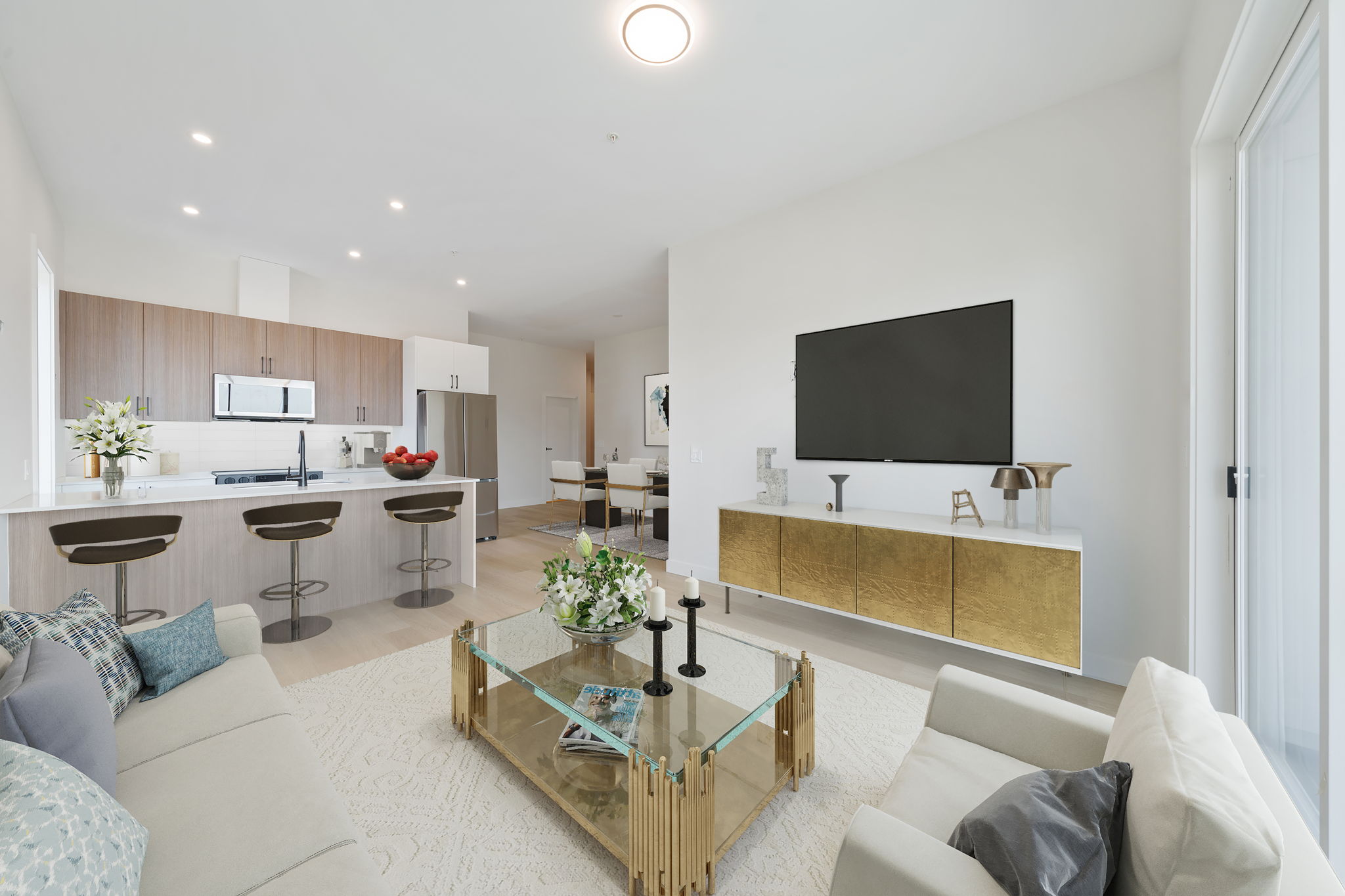
Deciding between renting vs buying in Victoria BC is a major choice for many residents. Victoria’s housing market is moving in two directions at once: rents have been easing, while ownership prices (especially for single family homes) have stayed relatively firm. Using current numbers can help you make a decision based on reality, not headlines. Current Rental Market: Prices and Trends Victoria remains one of the pricier rental markets in Canada, but recent data shows rents have been trending down. Average asking rent (Victoria): about $2,224 across unit types (January 2026). One-bedroom: about $1,942 (January 2026), down 6.7% year-over-year. Two-bedroom: about $2,605 (January 2026), down 5.1% year-over-year. On supply, Greater Victoria is seeing more breathing room than recent years: Greater Victoria vacancy rate: about 3.3% (CMHC 2025 Rental Market Report, cited by the Province). What this means in plain terms: more choice, a bit more leverage for renters, and fewer situations where tenants feel forced to accept the first available unit. Buying in Victoria: Prices and Ownership Landscape On the ownership side, a helpful “apples-to-apples” metric is the MLS HPI benchmark (it tracks a typical home over time, rather than averages that can swing with the mix of what sold). From the Victoria Real Estate Board’s February 2026 market report (Victoria Core): Single family home benchmark: $1,307,400 (February 2026). Condominium benchmark: $545,600 (February 2026). Inventory has been healthier than the tightest years, with 2,903 active listings across the VREB region at the end of February 2026. That usually translates into more selection and a less frantic pace, but affordability still matters because the entry point remains high. Pros and Cons of Renting in Victoria Pros of Renting Lower upfront cost (no down payment or closing costs) Flexibility to relocate without selling No responsibility for major repairs and maintenance Recent rent softening and higher vacancy can improve negotiating position Cons of Renting Monthly payments do not build equity Rent is still expensive relative to local incomes Less control over the home and potential future rent increases Pros and Cons of Buying in Victoria Pros of Buying Builds equity over time More stability and control over your space Predictable payments if you choose a fixed-rate mortgage Cons of Buying High upfront costs (down payment, closing costs, property transfer tax, legal fees) Ongoing costs (maintenance, insurance, property taxes, condo fees if applicable) Market conditions vary by segment, and pricing is not guaranteed to rise year-to-year Making the Decision: What to Consider Your choice between renting vs buying in Victoria BC should match three things: Time horizon: Are you staying put for 3+ years, or is life still in motion? Cash position: Down payment, closing costs, and an emergency fund for ownership surprises Monthly reality: Compare rent to the true cost of ownership (mortgage, taxes, insurance, maintenance, and strata fees) A useful takeaway from the 2026 data is this: renting has become slightly less punishing than it was, while buying still requires a clear financial plan because benchmarks remain high. Final Thoughts Rents are easing and vacancy is up, while benchmark ownership prices in the Victoria Core have stayed relatively steady. That combination can create a “pause-and-plan” moment where renters gain options and buyers gain breathing room. If you want, we can run a simple rent vs buy comparison using your target neighbourhood, down payment, and comfort level with monthly costs, so your decision is grounded in real numbers. David M., 5-Star Review, via Google “Scott was a fantastic realtor—hardworking, knowledgeable, and truly dedicated to his clients. His expertise and great connections made the entire process smooth and stress-free. He went above and beyond to ensure everything was taken care of, and I couldn’t be happier with the results. I highly recommend Scott to anyone looking for a realtor.” Faber Real Estate Group Royal LePage Coast Capital Realty 📞 250-244-3430 📧[email protected] ℹ️ Scott Faber Personal Real Estate Corporation ℹ️ Cal Faber Personal Real Estate Corporation Vanessa Wood, Zachary Parsons, and Sophie Taylor “Building Lasting Relationships, One Home at a Time.”
Read more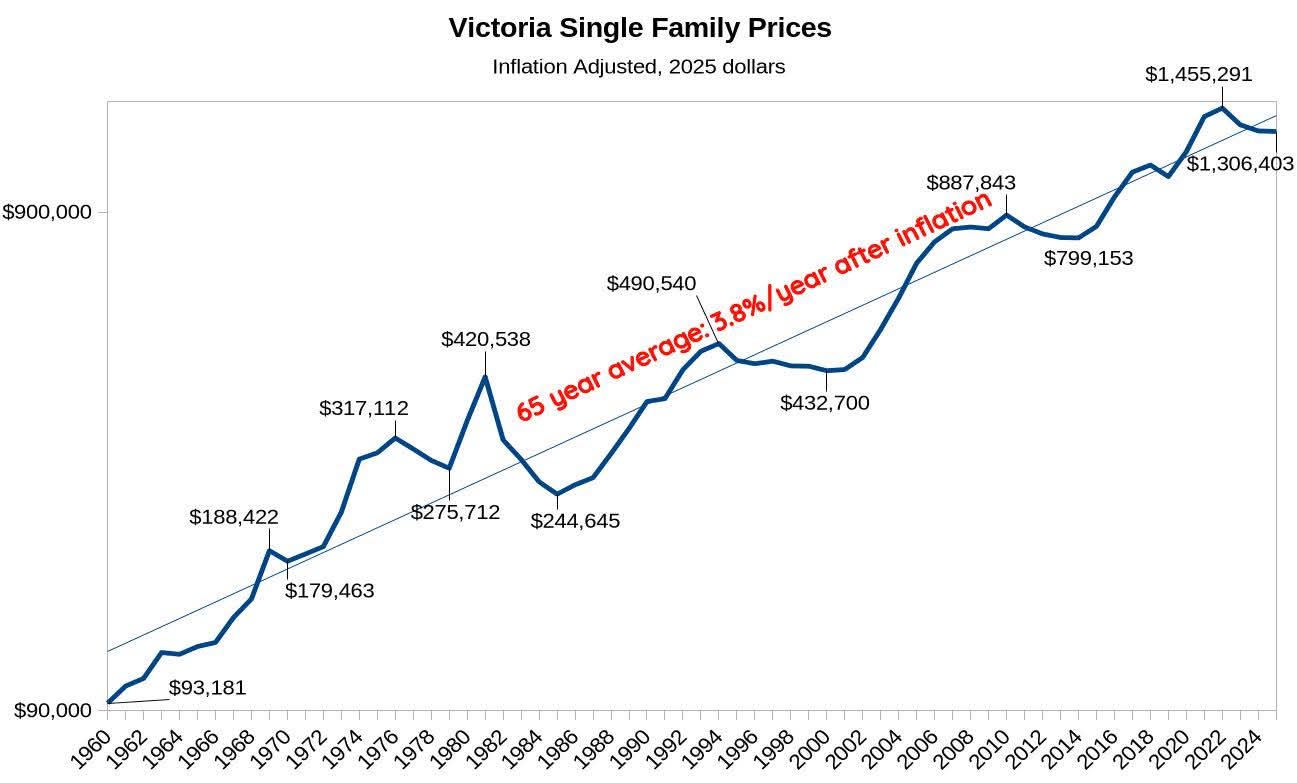
When we look at Victoria BC single-family home price inflation over the last five decades, the long-term trend shows steady growth in nominal prices that outpaces general inflation. While many narratives focus on the recent past, such as COVID, immigration, low interest rates, or specific crises, the evidence shows price inflation has been building over decades. Past performance does not dictate future results, and no single factor exclusively explains this trend. Early Growth: The 1970s and 1980s In the 1970s and early 1980s, Victoria’s housing market began a pattern of rising prices as the region’s economy grew, buoyed by stable government and service sector employment. Through the high interest rates of the early 1980s and the recession of the early 1990s, prices dipped at times but continued a long-term upward trajectory. Stabilization and Expansion: Mid-1990s to Early 2000s From the mid-1990s into the 2000s, demand increased with economic stability, limited developable land on the Peninsula, and relatively modest new supply. Nominal prices continued to rise gradually during this period. The 2008 global financial crisis slowed markets briefly, but there was no prolonged collapse as investors and local buyers still saw Victoria as a desirable place to live. Acceleration During the 2010s Entering the 2010s, prices accelerated markedly. Some attribute rapid price inflation solely to post-COVID dynamics or spikes in immigration. However, while these factors can influence short-term demand, the pattern of rising home values predates them by decades. Low interest rates after the 2008 crisis, provincial and national tax policies, and persistent supply constraints played roles, but none in isolation fully explain the long-term Victoria BC single family home price inflation. The COVID-19 Market Surge During and after the COVID-19 pandemic, many markets, including Victoria’s, saw sharper short-term increases. Still, this represents an amplification of pre-existing trends, not the beginning of them. Factors such as remote work and changing lifestyle preferences likely contributed to near-term demand swings, but research consistently shows that long-term price trends are influenced by multiple factors rather than a single event or policy. Multiple Forces Driving Long-Term Price Growth In reviewing 50 years of data, it is clear that demographics, economics, land supply, local planning policy, and broader macroeconomic conditions all interact. Narratives that claim the market rapidly escalated only after one event, such as COVID, high immigration, low rates, or a past financial crisis, are not fully supported by the evidence. These events influence the market, but long-term price inflation has been ongoing. Understanding Long-Term Housing Market Complexity Understanding Victoria BC single family home price inflation requires acknowledging the complexity of housing markets. While past performance does not dictate future results, long horizons help illustrate that price trends emerge from structural and cyclical influences over time. Lou N., 5-Star Review, via Google “Scott is a knowledgeable, professional, dedicated and thorough expert in his field. Excellent at what he does and we couldn't have found a better realtor to guide us through one of the most important decisions in our lives.” Faber Real Estate Group Royal LePage Coast Capital Realty 📞 250-244-3430 📧[email protected] ℹ️ Scott Faber Personal Real Estate Corporation ℹ️ Cal Faber Personal Real Estate Corporation Vanessa Wood, Zachary Parsons, and Sophie Taylor “Building Lasting Relationships, One Home at a Time.”
Read more