
Posts Tagged ‘GST rebate on new homes’
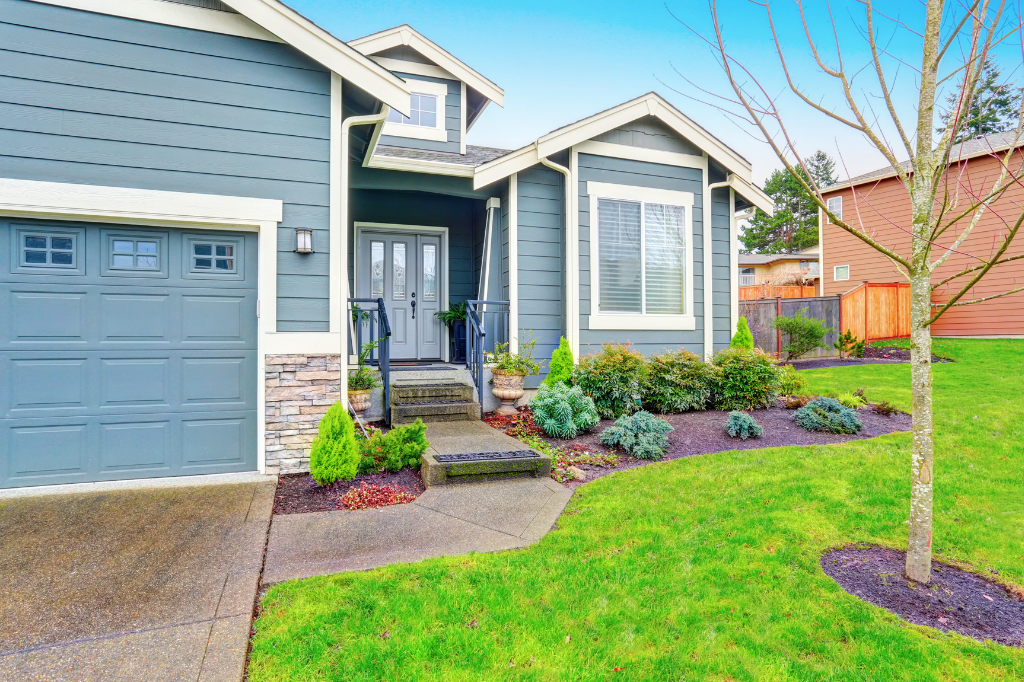
The GST rebate on new homes can make a meaningful difference for eligible first-time buyers, especially when comparing new condos, townhomes, and detached homes in Greater Victoria. The key is not just whether a property qualifies. It is where the rebate has the greatest practical impact on affordability, monthly comfort, and long-term fit. For eligible first-time buyers, the First-Time Home Buyers’ GST/HST Rebate can remove the federal GST on qualifying new homes valued up to $1 million, with a reduced rebate available between $1 million and $1.5 million. The maximum potential federal GST savings is $50,000. Canada’s Bill C-4 received Royal Assent on March 12, 2026, and the CRA notes that qualifying purchase agreements generally need to be entered into with the builder on or after March 20, 2025, and before 2031. Why the Rebate Changes the New Construction Conversation Buying new construction often feels different from buying resale. The price may include GST, the completion timeline may be months away, and buyers need to understand deposits, strata fees, warranty coverage, and what is included in the purchase price. The GST rebate on new homes matters because it can reduce one of the biggest added costs of buying new. For some buyers, that may improve the budget enough to stay in a preferred location. For others, it may help them choose a better floorplan, add parking, or keep more cash available after completion. Still, the rebate should not be the only reason to buy. A lower tax cost helps, but the right property still needs to fit your lifestyle, budget, and resale outlook. Where It Helps Most: New Condos For many first-time buyers in Greater Victoria, new condos may see the clearest benefit from the GST rebate. That is because condos are more likely to fall within the price range where the full rebate can apply. In a market where many buyers are trying to balance affordability with location, the rebate may help make a new condo more competitive against a resale option. New condos may be especially appealing when buyers want: Lower maintenance responsibilities A more walkable location Newer building systems Warranty protection Predictable finishes and modern layouts Access to entry-level ownership without taking on a larger detached home budget The trade-off is space. A condo may offer the strongest tax benefit, but buyers still need to think carefully about storage, parking, strata fees, rental bylaws, pet rules, and long-term livability. Where It Helps Differently: New Townhomes Townhomes often sit in the middle of the conversation. They may offer more space than a condo, but still avoid some of the cost and upkeep of a detached home. This is where the rebate can be useful, but buyers need to watch the price point closely. In some Greater Victoria neighbourhoods, new townhomes may fall under the $1 million mark. In others, they may move into the phase-out range, where the rebate becomes smaller. A new townhome may be a strong fit for buyers who want: More bedrooms or flexible work-from-home space Direct outdoor space A family-friendly layout Less maintenance than a detached home A longer ownership runway For many buyers, this is where the GST rebate can support a better lifestyle choice. The rebate may not always be as clean or complete as it is on a lower-priced condo, but it can still help reduce the gap between “we can afford it” and “this actually works for our next stage of life.” Where It Helps Least: New Detached Homes New detached homes can still benefit from the GST rebate, but this is often where the math becomes more limited. In Greater Victoria, new detached homes are more likely to exceed the $1 million threshold. Once the price moves between $1 million and $1.5 million, the rebate starts to phase out. At $1.5 million and above, the First-Time Home Buyers’ GST/HST Rebate no longer applies. That does not mean new detached homes are the wrong choice. It simply means the rebate may have less influence on the decision. A new detached home may still make sense for buyers who value: More land More privacy Long-term family space Suite potential, where permitted Fewer shared property decisions A longer-term ownership plan The key is to avoid overvaluing the rebate. If the home is already above the strongest rebate range, the decision should lean more on location, carrying costs, future flexibility, and resale strength. A Simple Way to Compare the Three Options The rebate helps most when the home price stays within the strongest eligibility range and the property still meets the buyer’s real needs. In practical terms: New condos may offer the clearest affordability boost. New townhomes may offer the best balance of space and savings. New detached homes may offer the most lifestyle flexibility, but often receive less rebate benefit due to higher pricing. That makes the “best” choice less about property type and more about fit. A condo with the full GST rebate may still be the wrong purchase if it feels too small within two years. A townhome with a partial rebate may be the smarter long-term move if it prevents an early resale. A detached home with little or no rebate may still be the right choice if the buyer has the budget and wants long-term stability. What Buyers Should Confirm Before Relying on the Rebate Before making a decision, buyers should confirm the details carefully with the builder, accountant, mortgage broker, and legal advisor where appropriate. Important questions include: Is GST included in the advertised purchase price? Will the rebate be credited by the builder or claimed after completion? Does the buyer meet the first-time buyer eligibility rules? Is the home intended as a primary residence? Does the agreement date qualify? Is the price within the full rebate, partial rebate, or no rebate range? How does the rebate affect the deposit, mortgage approval, and completion funds? The CRA notes that the rebate can apply in addition to the existing GST/HST new housing rebate where both apply, with the First-Time Home Buyers’ GST/HST Rebate acting as a top-up. The Bigger Picture for Greater Victoria Buyers The GST rebate on new homes can be valuable, but it should support the buying decision, not lead it. For first-time buyers in Greater Victoria, the bigger question is usually this: Does the home still make sense without the rebate? If the answer is yes, the rebate can be a helpful bonus. If the answer is no, the savings may be covering up a poor fit. Buyers still need to think about monthly payments, strata fees, closing costs, commute patterns, lifestyle needs, and how long the home is likely to work for them. The strongest purchase is not always the one with the biggest rebate. It is the one that balances savings, suitability, and long-term confidence. For buyers comparing new condos, townhomes, or detached homes in Greater Victoria, Faber Real Estate Group can help you understand where the GST rebate may help, how each property type compares, and what questions to ask before committing to a new construction purchase. Christina A., 5-Star Review, via Google “We had such a great experience working with Scott Faber during our recent home buying! From the start, Scott made everything super easy and was always there to answer our questions. Scott really listened to what we wanted and helped us find the perfect place. What we appreciated most was how down-to-earth and approachable he was. No matter what came up, Scott was on top of it and kept us in the loop the whole time. We felt like we were in great hands the entire process.” Faber Real Estate Group Royal LePage Coast Capital Realty 📞 250-244-3430 📧 [email protected] ℹ️ Scott Faber Personal Real Estate Corporation ℹ️ Cal Faber Personal Real Estate Corporation Vanessa Wood, Zachary Parsons, and Sophie Taylor “Building Lasting Relationships, One Home at a Time.”
Read more
The new GST rebate for first-time home buyers creates a real opening for buyers who were close to qualifying but still struggling with the extra cost of buying brand-new construction. The new GST rebate for first-time home buyers eliminates the GST on qualifying new homes up to $1 million, reduces it on qualifying new homes between $1 million and $1.5 million, and can save eligible buyers up to $50,000. The measure is now law, and the CRA has opened applications. For many buyers, the value is not just the rebate itself. The bigger opportunity is what the rebate changes in your timing, your budget, and your ability to buy new with more confidence. What the New GST Rebate Actually Does The rebate applies to eligible first-time buyers purchasing a newly built or substantially renovated home that will be used as their primary residence. Homes priced at or below $1 million can qualify for up to a full rebate of the GST, up to a maximum of $50,000. Homes priced between $1 million and $1.5 million receive a reduced rebate, and homes at or above $1.5 million do not qualify. CRA guidance includes an example showing a $1.25 million home qualifying for a $25,000 rebate. That matters because many buyers tend to think of GST as a fixed cost they simply have to absorb. In this case, it may no longer be a deal-breaker if you are eligible. Who May Qualify Generally, the CRA says a qualifying first-time buyer must meet all of the following: Be at least 18 years old Be a Canadian citizen or permanent resident Not have lived in a home they owned, or that their spouse or common-law partner owned, as a primary residence in the calendar year of taking ownership or in the previous four calendar years Be buying the home as a primary place of residence Be the first individual to occupy the home after construction or substantial renovation is completed Not have previously received this FTHB GST/HST rebate, and neither can their spouse or common-law partner This is an important distinction. Some buyers hear “first-time” and assume it only means “never bought a home before.” The CRA test is more specific than that. In some cases, someone who owned in the past may qualify again if enough time has passed and the occupancy rules are met. Timing Matters More Than Most Buyers Realize The rebate generally applies if the agreement of purchase and sale with the builder was entered into on or after March 20, 2025 and before 2031. For homes purchased from a builder, construction must begin before 2031, be substantially completed before 2036, and ownership must transfer before 2036. CRA also notes that applications are open, although it is still updating systems for certain purchase agreements signed between March 20, 2025 and May 26, 2025. In practice, that means buyers should not just ask, “Do I like the home?” They should also ask: Does my contract date fit the program window? Will this home be my primary residence? Am I clearly eligible under the CRA definition? Is the builder project timeline aligned with the completion rules? A good purchase is not only about the unit. It is also about whether the structure of the deal lets you capture the savings. How to Take Advantage of It in Real Life 1. Confirm whether you actually meet the first-time buyer test Do this before you fall in love with a unit. The four-calendar-year lookback is where some buyers get caught. If you or your spouse lived in a home you owned too recently, the rebate may not apply. This is one of the first filters to check. 2. Focus on qualifying new construction, not resale This rebate is aimed at eligible buyers purchasing a newly built or substantially renovated home, or in some cases building their own. It is not a blanket rebate for all homes on the market. That means your search strategy may need to shift. If you were comparing resale condos and pre-completion or near-completion new condos as if they were equal, this rebate may change the math. 3. Rework your budget based on net cost, not sticker price A lot of buyers shop by headline price. That can be a mistake. A better question is: what is my effective cost after the rebate, strata fees, closing costs, and financing are all considered? The rebate will not solve affordability on its own, but it can materially improve your position. That may mean: A smaller cash requirement Better flexibility for closing costs A lower all-in purchase cost The ability to consider a better-located or better-finished home than you originally thought possible 4. Review the builder contract carefully The rebate is generous, but it is still rule-based. You want to understand: Whether GST is included or added to the purchase price What the builder expects from you for rebate documentation Whether any assignment, occupancy, or title timing affects your eligibility What your estimated closing statement looks like with and without the rebate This is where good representation matters. It is easy to focus on the floorplan and forget the contract language that controls the outcome. 5. Use the rebate to improve your long-term position, not just to stretch higher The temptation will be to use every dollar of savings to chase a more expensive home. Sometimes that makes sense. Often, the smarter move is to use the savings more strategically: Keep a stronger emergency fund after closing Reduce financing pressure Furnish the home without leaning on high-interest debt Leave room for future life changes rather than buying at your absolute ceiling Affordability is not just about getting approved. It is about still feeling stable six months after move-in. Why Pavilion Langford Is Worth Watching For buyers in Greater Victoria and the Westshore, Pavilion Langford is one example of where this new rebate may have practical value. Pavilion is a 60-unit condominium development in Langford’s Cultural District, with homes currently starting at $364,900. The project highlights modern, sustainable design features, secure underground parking, rooftop solar panels, EV charging, premium insulation, Energy Star appliances, and a projected late spring 2026 completion timeline. That starting price matters because it puts Pavilion into a range that may be especially relevant for eligible first-time buyers looking at brand-new construction rather than resale. It is also worth noting that Pavilion is positioned close to shops, dining, markets, and other Westshore amenities, which can make it attractive for buyers who want convenience along with newer construction standards. For project details, floorplans, finishes, and updates, Pavilion’s website is the best source for current development-specific information. A Simple Example of Why This Matters Imagine a buyer who had written off new construction because GST made the total feel too high. Before this change, that buyer may have looked only at resale inventory, even if the resale options meant older systems, less energy efficiency, more future maintenance, and less functional layouts. Now, if they qualify, the rebate may narrow the gap enough that a new condo becomes a more realistic option. That does not mean new construction is automatically the better buy. It means the comparison deserves to be revisited with fresh numbers. That is where market strategy becomes more important than assumptions. Mistakes to Avoid Assuming all first-time buyers automatically qualify Eligibility is specific. Age, residency, prior ownership history, occupancy, and timing all matter. Confusing announcement dates with eligibility dates The law received Royal Assent on March 12, 2026, but the agreement timing rules generally reach back to purchase agreements entered into on or after March 20, 2025. Ignoring primary residence requirements This is designed for a home you intend to live in as your primary residence, not a casual investment play. Shopping only by monthly payment Monthly payment matters, but it should not replace a full closing-cost and contract review. Relying on general summaries instead of property-specific advice A rebate can improve the picture, but the right decision still depends on the building, the contract, the strata, the neighbourhood, and your longer-term goals. Final Thought The smartest way to use this rebate is not to treat it like a headline. Treat it like a planning tool. For some buyers, it will make brand-new construction possible sooner. For others, it will improve the quality of what they can buy without forcing them to overextend. Either way, the opportunity is strongest when you verify eligibility early, compare true net costs, and target projects that fit both the rules and your lifestyle. If you want help comparing qualifying new-construction options, including Pavilion Langford, and figuring out whether this rebate could strengthen your buying strategy, contact Faber Real Estate Group for tailored guidance. Darcie R., 5-Star Review, via Google “We had the best experience with Scott and the Faber Group team helping us buy our first house! From start to finish it was a positive experience, & Scott went the extra mile every chance he could. Based on our search parameters, we didn’t even come across this house, but using his expertise, he was able to find us our dream home that matched all of our criteria! We are so beyond happy and would absolutely recommend reaching out to Scott if you are looking to buy an amazing home.” Faber Real Estate Group Royal LePage Coast Capital Realty 📞 250-244-3430 📧[email protected] ℹ️ Scott Faber Personal Real Estate Corporation ℹ️ Cal Faber Personal Real Estate Corporation Vanessa Wood, Zachary Parsons, and Sophie Taylor “Building Lasting Relationships, One Home at a Time.”
Read more