
Posts Tagged ‘Greater Victoria market update’
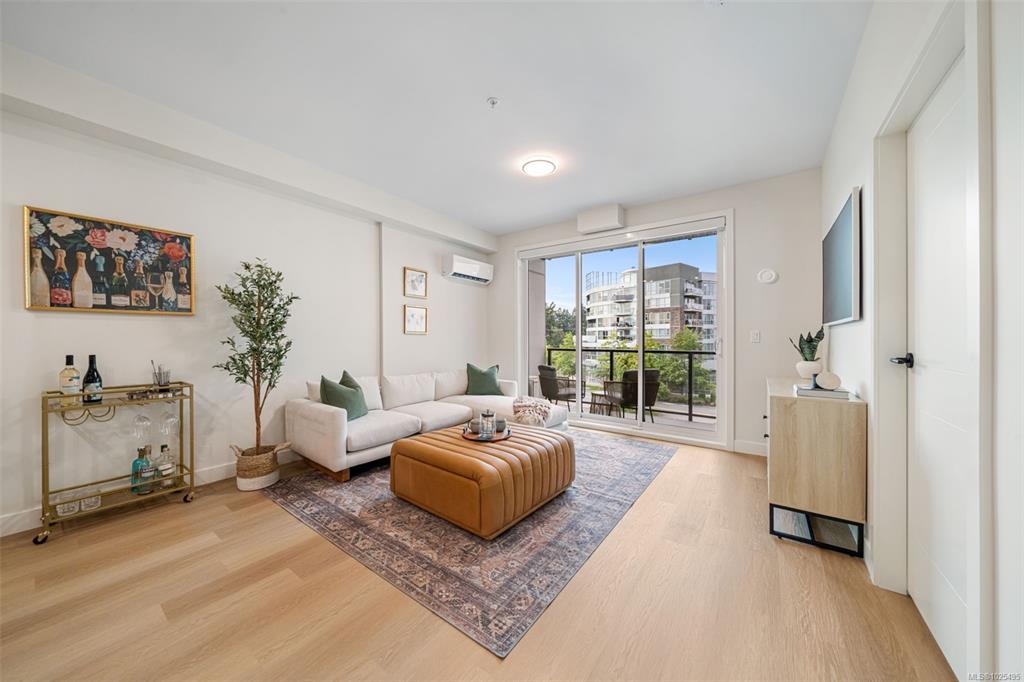
How to read the Victoria market without overreacting to headlines starts with one simple idea: national housing stories and local real estate decisions are not the same thing. It is easy to see a dramatic headline about falling sales, rising uncertainty, or interest rate risk and assume the same conclusion applies directly to Greater Victoria. However, the local market has its own mix of inventory, buyer demand, price behaviour, and micro-markets. In March 2026, the Victoria Real Estate Board reported 579 sales, which was 24.5 per cent higher than February, while active listings climbed to 3,261, up 7.9 per cent from March 2025. That is not a frozen market. It is a more balanced one. (vreb.org) That distinction matters. Nationally, CREA reported that Canadian home sales activity in March 2026 was virtually unchanged month over month, and Reuters reported that CREA also downgraded its 2026 forecast amid higher mortgage costs and wider uncertainty. At the same time, the Bank of Canada held its policy rate at 2.25 per cent on March 18, 2026. Those are useful signals, but they are not a substitute for local interpretation. (crea.ca; bankofcanada.ca; (Reuters)) Headline Risk Comes From Oversimplifying the Story Most headlines are built to compress a complicated market into one emotion. That emotion might be fear, urgency, optimism, or caution. The problem is that real estate decisions are rarely improved by emotional compression. A headline might say sales are down, but that does not tell you whether inventory is up, whether pricing is stable in your segment, whether one property type is outperforming another, or whether your neighbourhood is behaving differently from the broader region. VREB said current conditions in Greater Victoria are creating fewer high-pressure transactions and giving both buyers and sellers more time for due diligence. That is a much more useful insight than a broad headline suggesting the sky is falling. (vreb.org) Start With Inventory, Not Emotion If you want to understand what is really happening, start by asking how much choice buyers have. At the end of March 2026, there were 3,261 active listings in the VREB region. That was up 12.3 per cent from February and up 7.9 per cent from March 2025. More inventory usually means more competition for sellers and more leverage for buyers. It also means buyers can be more selective, which tends to stretch timelines and reduce panic-driven decisions. (vreb.org) This is why one negative sales headline can be misleading. If listings are up but prices are relatively stable, that is a different market story from a true downturn driven by weak demand and collapsing values. Then Look at Property Type The Victoria market is not one market. It is a collection of smaller markets. CREA’s Victoria market conditions data for the first quarter of 2026 shows different timelines by property type: single-family homes: 26 median days on market townhouses: 31 median days on market condominiums: 30 median days on market (creastats.crea.ca) It also shows higher months of inventory across all three major categories compared with a year earlier. Single-family inventory was 4.3 months in Q1 2026, townhouse inventory was 3.7 months, and condominium inventory was 5.3 months. (creastats.crea.ca) So if a headline says “the market is slowing,” the better question is: which part of the market? Price Changes Need Context Too Another common mistake is reacting to one price stat without asking what it actually measures. VREB’s March 2026 benchmark for a Victoria Core single-family home was $1,330,200, down 1.1 per cent from March 2025 but up from February 2026. The benchmark for a Victoria Core condominium was $553,800, down 0.8 per cent year over year and also up from February. (vreb.org) That is a more nuanced story than a dramatic “prices are falling” headline. In plain terms, some values are softer than a year ago, but the month-to-month trend into spring improved. That is exactly why broad headlines can distort what is actually happening on the ground. Pay Attention to Timing, Not Just Direction A lot of headlines miss the seasonal rhythm of Victoria real estate. VREB noted that March 2026 followed a fairly typical spring pattern, with both sales and listings increasing from the previous month and the market generally building toward a peak in May or June. (vreb.org) That matters because a temporary slowdown in January or February can look dramatic in a headline while still being completely normal in a seasonal market cycle. Without context, people mistake rhythm for risk. Use Headlines as Prompts, Not Conclusions Good market headlines can still be useful. They just should not be treated as your final interpretation. A better process is: read the headline check whether it is national, provincial, or local compare sales, inventory, and benchmark prices break the market down by property type ask what is happening in your actual neighbourhood and price band That approach is slower, but it leads to better decisions. What Buyers and Sellers Should Really Watch Instead of reacting to every market story, buyers and sellers in Victoria should focus on the indicators that affect strategy most directly: active listings and months of inventory median days on market by property type benchmark price movement over time competition in your exact neighbourhood and price segment whether your goals depend on speed, price, or flexibility For example, someone buying a condo in the core should not interpret the market the same way as someone selling a detached home in a tightly held neighbourhood. The Bigger Lesson The Victoria market rarely rewards people for being the most emotional person in the room. It usually rewards people who understand local conditions, compare the right numbers, and avoid making big decisions based on broad narratives. Headlines are designed to get attention. Strategy is designed to get results. Final Thought If you want to read the Victoria market without overreacting to headlines, focus less on noise and more on what the local data is actually saying. Inventory is higher, buyers have more room to think, and different segments are moving at different speeds. That is not a reason to panic. It is a reason to be more strategic. If you want help interpreting what the current market means for your next move, contact Faber Real Estate Group for grounded local advice tailored to your situation. Brandon S., 5-Star Review, via Google “My wife and I sold our condo in View Royal and bought a place in Esquimalt with the help of The Faber Group. Scott helped us to find and buy the perfect home for our growing family in a very competitive market. He got to know our wants and needs and worked within our schedule with a small baby. Once we found the perfect place Scott helped us to get it for under the asking price and sold our condo in one day on the market with multiple offers over asking! We are so grateful that Scott helped us through this process, answering our many questions and alleviating our concerns. Thank you for helping us sell our first home and buy a beautiful house for our family.” Faber Real Estate Group Royal LePage Coast Capital Realty 📞 250-244-3430 📧[email protected] ℹ️ Scott Faber Personal Real Estate Corporation ℹ️ Cal Faber Personal Real Estate Corporation Vanessa Wood, Zachary Parsons, and Sophie Taylor “Building Lasting Relationships, One Home at a Time.”
Read more
The Greater Victoria real estate market is giving buyers more room to breathe than it did a year ago. The Greater Victoria real estate market is still active, but it is clearly more competitive for sellers. Sales are down from last year, inventory is up, and buyers have more time to compare options, negotiate, and look for value. In March 2026, a total of 579 properties sold through the Victoria Real Estate Board, which was 5.5% lower than March 2025, when 613 properties sold. Detached home sales were down 2.4% year over year, and condo sales were down a sharper 18.8%. At the same time, active listings climbed to 3,261, up 7.9% from March 2025 and 12.3% from February 2026. That matters because it tells us buyers are not competing in the same tight environment they were used to in past markets. What That Means in Plain Terms This is a market with more supply and softer demand than last spring. That does not mean homes are not selling. It means sellers need to adjust their expectations. When inventory rises and sales fall, buyers gain leverage. They can be more selective. They can wait for the right home. They can compare condition, location, layout, and price across more listings. They are also more likely to push for better terms, ask tougher questions, and look for homes they feel are priced well from day one. For sellers, this is not the kind of market where most properties can simply come out high and expect to attract a top-dollar result. The strategy has to be tighter than that. Price, presentation, and timing all matter more when buyers have options. Buyers Are Looking for Deals One of the clearest signals in the current numbers is that buyers are shopping carefully. The Victoria Core benchmark for a single family home in March 2026 was $1,330,200, down 1.1% from March 2025. The benchmark for a condo was $553,800, down 0.8% year over year. Prices have not collapsed, but the direction tells an important story: buyers are resisting overpricing, and values are not rising fast enough to bail out an ambitious list price. That is why today’s buyers are often drawn to homes that feel like strong value. They are not just asking, “Do I like this home?” They are also asking, “Is this priced better than the other five I saw this week?” In a market like this, the overpriced listing often becomes the listing that sits. The Market Is Close to Buyer-Friendly Territory The sales-to-active listings ratio helps explain the tone of the market. In March 2026, there were 550 total residential sales and 3,261 active listings, which works out to roughly 16.9%. VREB notes that for Victoria, a ratio below 17% points to downward pressure on prices, 17% to 28% is considered balanced, and above 28% signals upward pressure on prices. In other words, the market is sitting right on the edge of buyer-friendly conditions. That does not mean every neighbourhood or property type behaves the same way. Greater Victoria is still made up of many micro-markets. A well-priced home in a high-demand pocket can still move quickly. But broadly speaking, sellers are competing harder for attention than they were a year ago. What Sellers Need to Understand Right Now If you are thinking about selling, the message is not “do not sell.” The message is do not sell with last market’s expectations. This market rewards sellers who: price based on current competition, not peak headlines prepare the home properly before it hits the market understand what buyers will compare it against respond quickly when feedback points to price or condition concerns This is especially important because buyers are no longer being rushed into decisions at the same pace. VREB itself noted that the current mix of supply and demand has created fewer high-pressure transactions and has given both sides more time for due diligence and decision-making. That is a major shift from the kind of market where almost any decent listing could rely on urgency to do part of the work. The Bottom Line The current Greater Victoria market is more competitive for sellers than it was last year. Sales are down. Inventory is higher. Buyers have more choice and are looking closely for value. That means top-dollar outcomes are still possible, but they are far less likely to come from overpricing or wishful thinking. They come from accurate pricing, strong preparation, and a strategy built for the market that exists now, not the one sellers remember. For homeowners considering a move, this is the time to be realistic, not reactive. A smart strategy can still produce a strong result, but the market is asking sellers to earn it. If you are thinking about selling and want honest advice on where your home fits in today’s market, contact Faber Real Estate Group for a clear pricing and positioning strategy tailored to your property. Michael F., 5-Star Review, via Google “Cal and Scott exceeded our expectations in every way. They were always available to answer our questions and address any concerns immediately, providing exceptional support throughout the entire process. Their dedication and expertise made the selling and buying experience seamless and stress-free.” Faber Real Estate Group Royal LePage Coast Capital Realty 📞 250-244-3430 📧[email protected] ℹ️ Scott Faber Personal Real Estate Corporation ℹ️ Cal Faber Personal Real Estate Corporation Vanessa Wood, Zachary Parsons, and Sophie Taylor “Building Lasting Relationships, One Home at a Time.”
Read more