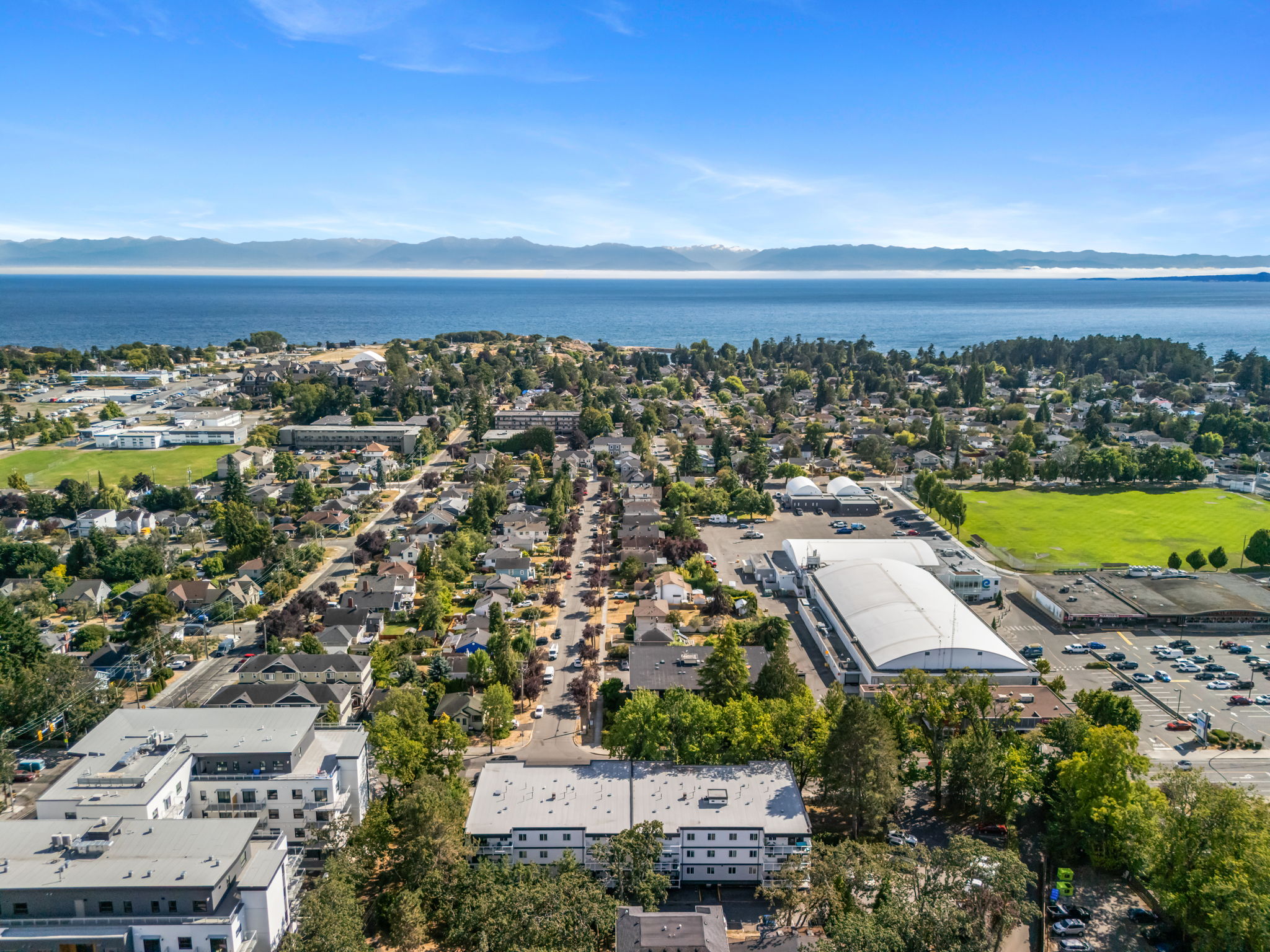
How Land Assembly Works in Greater Victoria Growth Corridors
April 8, 2026
As growth planning evolves across Greater Victoria, more attention is shifting toward key corridors where municipalities want to see additional housing, mixed-use development, and more walkable urban form. That is what makes land assembly opportunities in growing corridors an increasingly important topic for property owners, builders, and investors watching the region closely. In Saanich, the 2024 Official Community Plan directs most housing and employment growth toward Centres, Corridors, and Villages, while current planning work includes the Quadra McKenzie Plan, the Shelbourne Valley Plan update, the Tillicum Burnside Plan, and the Uptown Douglas Corridor Plan. Victoria’s newly adopted Victoria 2050 Official Community Plan is also intended to guide the city’s growth over the coming decades.
For owners, this creates a strategic shift. A property that once looked like a standard holding may now sit in an area where future land use policy supports greater density or a broader mix of uses. That does not automatically create redevelopment value, but it can change the conversation significantly. The key is understanding where corridor planning is moving, what form of growth is being encouraged, and whether a single site or group of adjacent properties could eventually support a stronger redevelopment opportunity.
What a Land Assembly Actually Means
A land assembly is when two or more neighbouring properties are brought together to create a site large enough to support a development that would not be feasible on a single parcel alone. In growing corridors, that often matters because municipalities are planning for more housing near major transportation routes, commercial nodes, and daily amenities. Saanich’s corridor planning documents specifically describe corridors as places intended to support additional housing in locations with strong access to active transportation networks and frequent transit.
This is why land assembly can become relevant even for owners who were not originally thinking about redevelopment. The opportunity may not come from the current use of the property. It may come from the site’s position within a future growth area.
Why Growing Corridors Matter
Not all redevelopment potential is equal. Corridor growth areas tend to attract more interest because municipalities often want them to absorb a meaningful share of future housing growth while supporting better transportation choices and more complete communities. Saanich’s Centre, Corridor and Village planning work is explicitly intended to implement the Official Community Plan vision of directing most housing and employment growth to those areas.
That matters because value in a land assembly is rarely just about today’s house or building. It is about future use, future density, site dimensions, frontage, access, servicing, and policy support. When those elements begin to align, corridor properties can become much more strategically important than they first appear.
Where These Conversations Are Happening
In Greater Victoria, some of the most relevant conversations are happening in municipalities that are actively updating corridor and growth-area plans.
Saanich
Saanich has been especially active, with current or recent planning work tied to:
Quadra McKenzie
Shelbourne Valley
Tillicum Burnside
Uptown Douglas Corridor
The draft Quadra McKenzie Plan describes multiple Centres, Corridors, and Villages within the plan area, including the McKenzie Corridor and Quadra Corridor. The Uptown Douglas Corridor plan is also being advanced as a long-term framework to guide change over the next 30 years.
Victoria
Victoria’s 2025 Official Community Plan update, Victoria 2050, sets the broader long-term growth framework for the city. That does not mean every site is a redevelopment play, but it does reinforce the importance of understanding which areas are positioned for more change over time.
The takeaway is simple: if a property sits along or near a corridor where municipalities are planning for increased housing intensity, broader redevelopment interest may follow.
What Makes a Corridor Property More Interesting
A corridor property becomes more compelling when several factors start working together:
strong frontage or depth
adjacency to other parcels that could be assembled
location near frequent transit
proximity to commercial services or village centres
supportive land use designations or draft planning direction
site geometry that improves development efficiency
This is where many owners miss the bigger picture. A single property may not appear remarkable on its own, but when combined with neighbouring lots, the redevelopment potential can change substantially. That is often where land assembly value begins.
Why Owners Should Be Careful Not to Over-Assume
This is also where caution matters. Being in or near a growing corridor does not automatically mean a property is ready for redevelopment today, nor does it guarantee a specific future value. Policy direction, servicing, lot configuration, setbacks, urban design requirements, market timing, and municipal approvals all shape what is actually possible. The right question is not whether a property is in a growth area alone. The better question is whether the site has realistic redevelopment potential within the policy framework that is emerging.
That is why owners should avoid making decisions based only on rumours, marketing language, or assumptions about what a developer might someday pay.
What Buyers and Investors Should Ask
For buyers considering assembly-oriented properties, a few questions matter early:
What does the current Official Community Plan say about this area?
Is there an active local plan, corridor plan, or village plan underway?
Are neighbouring sites likely to cooperate in an assembly?
What type of density or use appears to be supported?
Is the opportunity immediate, medium-term, or highly speculative?
How does current holding cost compare with likely redevelopment timing?
The strongest land assembly strategies are usually built on patience, planning context, and realistic timelines rather than excitement alone.
Why Timing Is So Important
Corridor opportunities can take years to mature. Municipal planning may move ahead of market demand, or market demand may outpace the pace of approvals. Either way, land assembly is rarely a quick transaction story. It is more often a strategy story. That is particularly true in areas where plans are still being refined or updated, because draft direction can be informative but is not the same as final zoning or approved development rights.
This is where good advice matters. Owners need to understand whether they should hold, sell, or begin conversations with neighbours. Buyers need to know whether they are purchasing real potential or simply paying a premium for a story that may take too long to materialize.
Final Thoughts
Land assembly opportunities in growing corridors are becoming more relevant across Greater Victoria as municipalities continue to direct growth toward transit-supportive, walkable areas. For some property owners, that may create meaningful future opportunity. For others, it may simply mean their asset deserves a closer strategic review than it did a few years ago.
The key is to separate possibility from certainty. Corridor growth planning can create opportunity, but the best decisions still come from understanding policy, timing, site context, and market reality. If you want help evaluating whether a property may have land assembly potential in a growing Greater Victoria corridor, contact Faber Real Estate Group for clear, strategic guidance.
Don S., 5-Star Review, via Google
“I would recommend them to anyone buying real estate on the Vancouver Island. The team is very knowledgeable, courteous and professional, adding a personal touch to building a strong relationship.”
Faber Real Estate Group
Royal LePage Coast Capital Realty
📞 250-244-3430
📧[email protected]
ℹ️ Scott Faber Personal Real Estate Corporation
ℹ️ Cal Faber Personal Real Estate Corporation
Vanessa Wood, Zachary Parsons, and Sophie Taylor
“Building Lasting Relationships, One Home at a Time.”
Read more