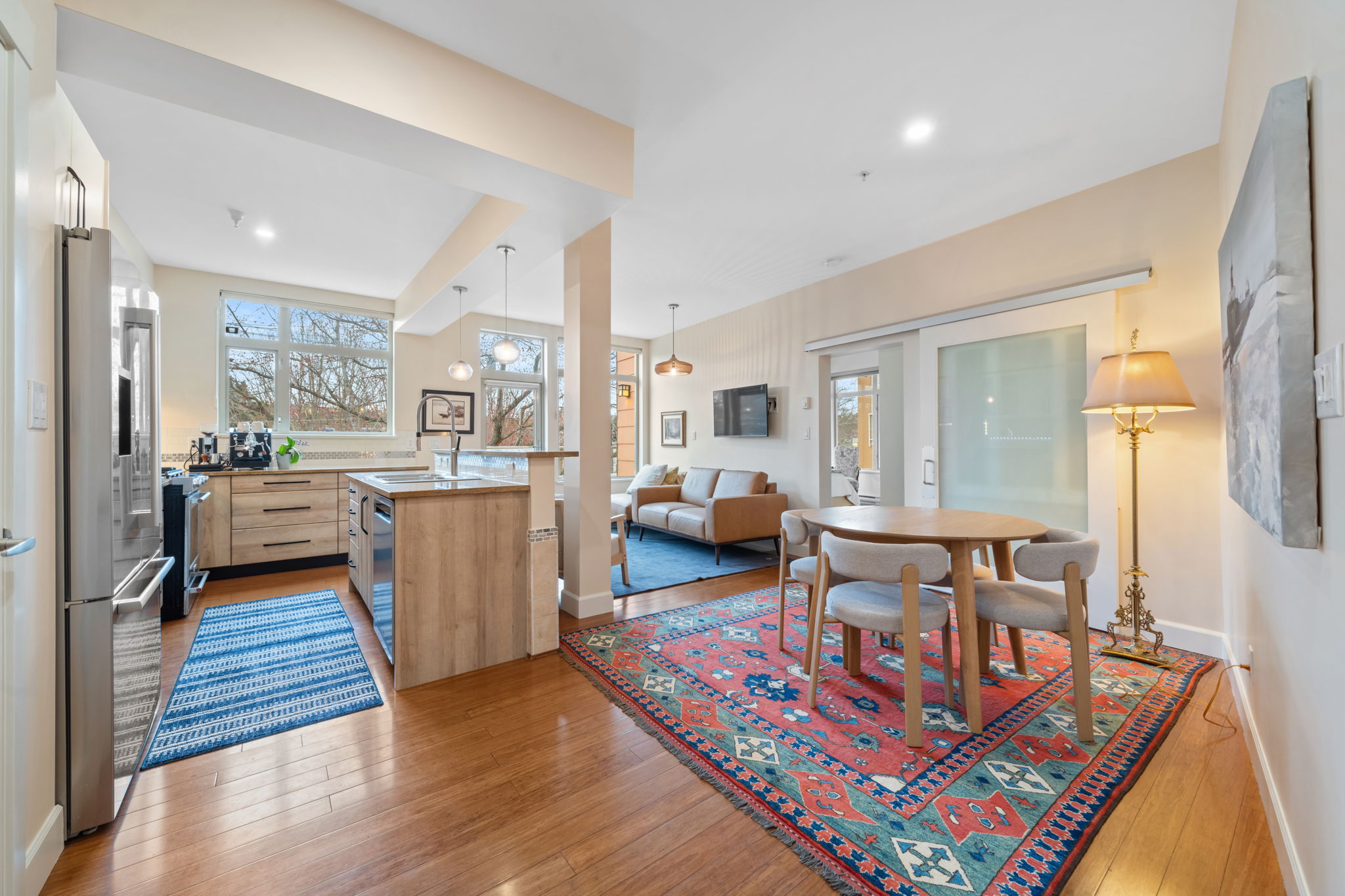
Preparing to Sell: When Decluttering Is Enough and When Staging Matters
May 5, 2026
Staging vs decluttering is an important distinction for sellers preparing a home for the market. Both can help a property show better, but they serve different purposes.
Decluttering removes distractions.
Staging creates direction.
Decluttering helps buyers see the space more clearly. Staging helps buyers understand how the space can feel, function, and support their lifestyle.
A clean, organized home is a great start. However, a decluttered room can still feel empty, awkward, cold, or forgettable. Staging adds intention so each space feels useful, balanced, and easy to connect with.
What Decluttering Really Does
Decluttering is the process of removing excess items from a home before photos, showings, and open houses.
This may include:
Clearing countertops
Reducing personal items
Removing extra furniture
Organizing closets
Tidying storage areas
Packing away seasonal decor
Simplifying shelves and surfaces
Creating cleaner sightlines
The goal is to reduce visual noise.
When there is too much to look at, buyers can struggle to focus on the home itself. Instead of noticing natural light, layout, storage, and room size, they may focus on personal belongings or crowded furniture.
Decluttering gives the home room to breathe.
What Staging Really Does
Staging goes a step further.
It is not only about taking things away. It is about deciding what should remain, what should be added, and how each room should be presented.
Good staging helps answer key buyer questions:
Where would the sofa go?
Can this bedroom fit a queen bed?
Is this dining area usable?
Could this den work as a home office?
Does the home feel bright and welcoming?
Does the layout make sense?
Staging helps buyers imagine how they would live in the home. It creates emotional clarity, not just visual cleanliness.
Decluttering Is About Less. Staging Is About Better.
This is the simplest way to understand the difference.
Decluttering asks, “What should we remove?”
Staging asks, “What story should this room tell?”
For example, a spare room might be decluttered by removing boxes and extra furniture. But if the room is left empty, buyers may still wonder how useful it is.
Staging might turn that same room into a home office, guest room, nursery, or reading space. Suddenly, buyers understand the value of the room.
That is the difference. Decluttering clears space. Staging gives it purpose.
Why Decluttering Alone May Not Be Enough
Decluttering is helpful, but it does not always solve presentation issues.
A home can be very clean and still feel:
Too sparse
Too dark
Poorly arranged
Dated
Unbalanced
Hard to photograph
Emotionally flat
For example, removing too much furniture from a living room can make it feel cold or oddly shaped. Clearing a bedroom too aggressively can make it difficult for buyers to understand scale. Empty rooms often look smaller in photos than people expect.
This is where staging can make a difference. It brings structure back into the space.
Why Staging Is Especially Useful in Photos
Most buyers see a home online before they ever visit in person.
That means photos matter.
Decluttering helps photos look cleaner. Staging helps photos feel more compelling.
A staged room can guide the eye, highlight natural light, show scale, and create a stronger first impression. In a competitive listing environment, that first impression can influence whether a buyer decides to book a showing.
This does not mean every home needs full professional staging. Sometimes light styling, furniture rearrangement, fresh linens, improved lighting, and small decor changes can make a major difference.
When Decluttering Is the Priority
Some homes do not need much staging. They simply need to be edited.
Decluttering may be the main priority when:
The home is already well furnished
Rooms have clear purpose
Furniture fits the space
Decor is neutral and current
The layout photographs well
Storage areas are tidy
The home already feels warm and inviting
In these cases, the best move may be to remove distractions and let the home speak for itself.
A good listing preparation plan does not add work for the sake of it. It focuses on what will actually improve the buyer experience.
When Staging Becomes More Important
Staging becomes more important when buyers may struggle to understand the home.
This can happen when:
The home is vacant
Rooms are unusually shaped
Furniture is too large or too small
The layout feels unclear
The home feels dark
The decor is very personal
Rooms lack a clear purpose
The property needs stronger emotional appeal
Staging can also help when the target buyer is different from the current owner. For example, a family home, downsizer-friendly condo, or investment property may need to be presented in a way that matches the most likely buyer profile.
Staging Does Not Have to Mean Overdecorating
One common misconception is that staging makes a home feel fake or overly styled.
Good staging should do the opposite.
The best staging feels natural, simple, and supportive. It should help buyers notice the home, not the furniture.
The goal is not to create a magazine spread. The goal is to make the property feel clear, comfortable, and easy to understand.
A well-staged home often feels:
Bright
Balanced
Functional
Calm
Warm
Spacious
Easy to move through
That feeling matters because buying a home is both practical and emotional.
Small Staging Adjustments Can Have a Big Effect
Staging does not always require renting furniture or redesigning the entire home.
Sometimes the most effective changes are simple:
Repositioning furniture
Removing heavy window coverings
Adding brighter bulbs
Updating bedding
Using fresh towels
Simplifying artwork
Adding a mirror
Creating a clear office area
Improving patio furniture placement
Setting up a small dining space
These details help buyers understand how each area can be used.
In Greater Victoria, outdoor spaces also deserve attention. A clean patio with a small seating area can help buyers see lifestyle value, even if the space is modest.
How Sellers Should Think About Both
The strongest listing preparation often uses both decluttering and staging.
A good process usually looks like this:
First, declutter to remove distractions
Then, clean and repair obvious issues
Next, assess layout and furniture placement
Then, stage or style key areas
Finally, prepare the home for photos and showings
Decluttering creates the foundation. Staging creates the impression.
Together, they help buyers focus on the best parts of the property.
Final Thoughts
Staging vs decluttering is not about choosing one or the other. It is about understanding what each one does.
Decluttering helps buyers see the home clearly. Staging helps them understand how it lives. One removes distraction. The other creates connection.
For sellers, the right approach depends on the property, the target buyer, and the condition of the home. Some homes only need a thoughtful edit. Others need more strategic presentation to help buyers see the full potential.
If you are preparing to sell in Greater Victoria and want advice on what your home needs before listing, contact Faber Real Estate Group for practical guidance and a clear preparation plan.
Faber Real Estate GroupRoyal LePage Coast Capital Realty📞 250-244-3430📧 [email protected]ℹ️ Scott Faber Personal Real Estate Corporationℹ️ Cal Faber Personal Real Estate CorporationVanessa Wood, Zachary Parsons, and Sophie Taylor“Building Lasting Relationships, One Home at a Time.”
Read more