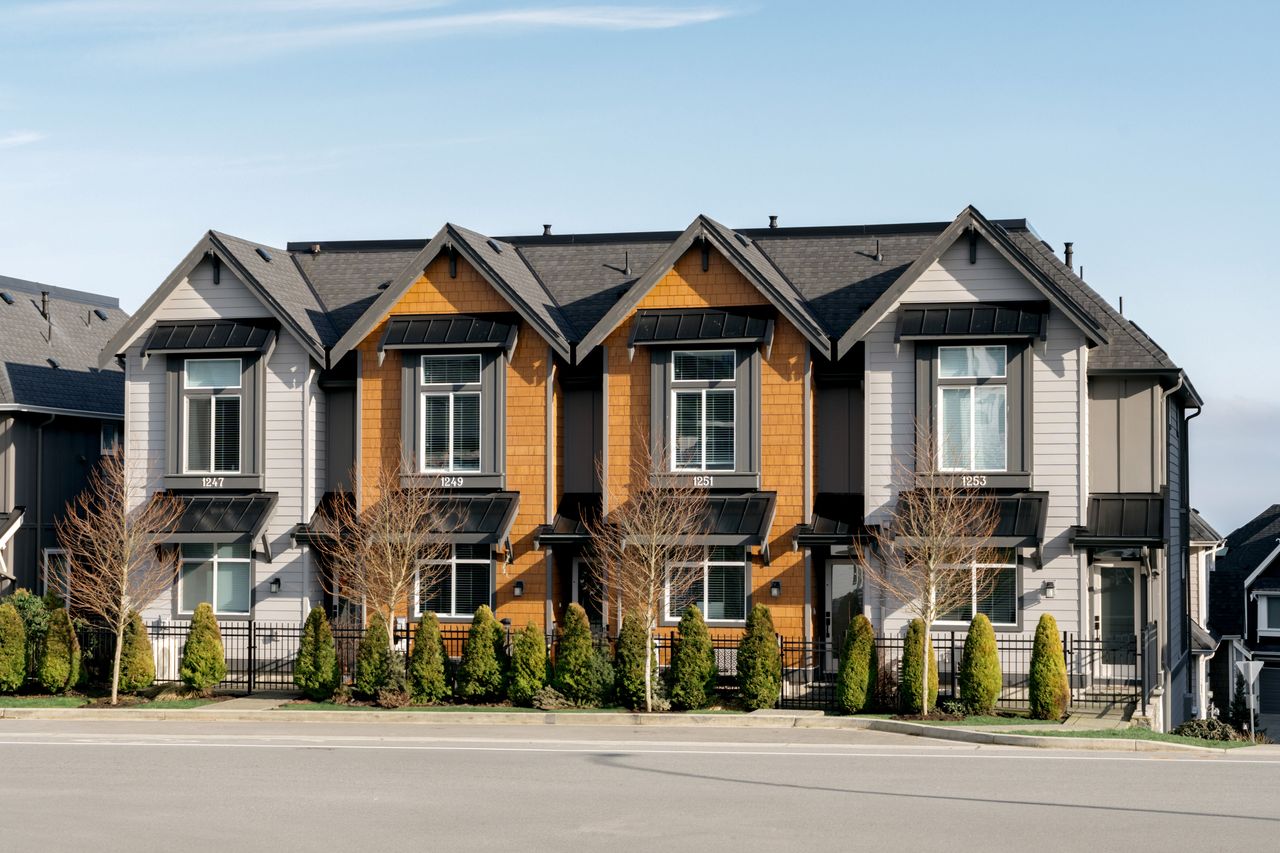
Condo vs Townhouse in Victoria: Which Should You Buy?
October 21, 2026
Condo vs Townhouse in Victoria: Which Should You Buy?
Updated October 2026 | By Faber Real Estate Group
If you're buying a home in Victoria, BC, deciding between a condo and a townhouse is one of the most common decisions you'll face.
Both offer an alternative to detached homeownership, but they come with different costs, layouts, responsibilities, and lifestyle considerations.
A condo is often the better choice for buyers who prioritize affordability, walkability, and lower day-to-day maintenance. A townhouse typically appeals to those looking for more living space, additional privacy, and features such as a garage or private outdoor area.
But the right decision isn't always as straightforward as choosing more space or a lower purchase price.
A condo in James Bay could offer a completely different lifestyle from a townhouse in Langford, even if both properties fit within your budget.
Here's how to compare the two and determine which makes the most sense for your next move in Greater Victoria.
Condo vs Townhouse in Victoria: What's the Difference?
The biggest differences between condos and townhouses are generally their layouts, amount of private space, maintenance arrangements, and overall ownership costs.
Feature
Condo
Townhouse
Purchase price
Often lower
Often higher
Living space
Typically smaller
Typically larger
Layout
Often single-level
Often multiple levels
Outdoor space
Balcony or patio
Patio, deck, or small yard
Parking
Often underground or surface parking
Often driveway or garage
Privacy
May have neighbours above and below
Often fewer shared walls
Maintenance
More shared building maintenance
Varies by ownership and strata
Strata fees
Common
Common for strata townhouses
Best suited for
First-time buyers, professionals, downsizers
Families, growing households, buyers needing space
These are general differences rather than guarantees. A luxury condo can be larger and more expensive than a townhouse, while some townhouse developments offer compact layouts with limited outdoor space.
An important distinction in British Columbia is that a townhouse describes a style of home, not necessarily its ownership structure.
Many townhouses in Victoria are strata properties, just like apartment-style condominiums. Others may be freehold or part of a bare land strata development, where maintenance and insurance responsibilities can be substantially different.
Understanding the ownership structure is just as important as understanding the floor plan.
Are Condos More Affordable Than Townhouses in Victoria?
Generally, condos provide a lower entry point into Greater Victoria's housing market.
According to the Victoria Real Estate Board, the September 2026 MLS® Home Price Index benchmark value for a condominium in the Victoria Core was $547,800.
That's one reason condos remain an important option for first-time buyers and people looking to reduce their housing expenses.
Townhouses often cost more because they typically provide additional interior space, multiple bedrooms, private entrances, and dedicated outdoor areas.
However, location can change the equation.
A newer two-bedroom condo near downtown Victoria may cost as much as, or more than, an older townhouse in another part of Greater Victoria.
Buyers who expand their search to Langford, Colwood, View Royal, or Sooke may find different opportunities for their budget.
For a closer look at the relationship between price and neighbourhood, read our guide to Comparing Victoria Neighbourhoods at the $800K Price Point.
How Do Monthly Ownership Costs Compare?
The purchase price is only part of the financial picture.
When comparing a condo and townhouse, buyers should account for their mortgage, property taxes, strata fees, utilities, insurance, and maintenance expenses.
Consider two hypothetical purchases.
Monthly Expense
$550K Condo
$750K Townhouse
Mortgage payment
$2,446
$3,335
Strata fees
$425
$320
Property taxes
$225
$300
Owner's insurance
$65
$95
Utilities
$110
$200
Additional maintenance savings
$100
$175
Estimated monthly total
$3,371
$4,425
Illustrative calculations assume a 20% down payment, 4.5% mortgage interest rate, and 25-year amortization. Strata fees, taxes, insurance, utilities, and personal maintenance savings are hypothetical budgeting amounts, not verified expenses for specific properties. Closing costs are excluded.
In this example, the townhouse costs approximately $1,054 more per month.
That difference could represent additional space, bedrooms, parking, or outdoor living.
For some households, those features justify the added expense.
For others, the lower monthly commitment of a condo creates greater financial flexibility for travel, savings, and everyday life.
The better purchase isn't necessarily the property with the lower price. It's the one whose total cost matches both your housing needs and financial priorities.
For more on purchasing power, see our article How Much House Can I Afford in Victoria, BC?.
Do Condos Have Higher Strata Fees Than Townhouses?
Not necessarily.
Strata fees depend on the property's shared expenses, building systems, amenities, insurance, maintenance requirements, and financial planning.
For example, an apartment-style condominium might have expenses associated with elevators, underground parking, shared hallways, security systems, and building amenities.
A townhouse development may have fewer shared facilities but still require money for landscaping, roofing, road maintenance, insurance, or other common property.
Some townhouse owners are also responsible for expenses that a different strata corporation might cover.
This is why comparing strata fees without examining what they include can be misleading.
A condo with a $500 monthly strata fee isn't automatically a worse purchase than a townhouse charging $250 per month.
The condo's fee may cover services and long-term maintenance contributions that the townhouse owner would otherwise need to budget for separately.
Lower fees can be attractive, but the financial health of the strata corporation matters more than simply finding the cheapest monthly fee.
When purchasing either property type, reviewing the strata budget, contingency reserve fund, depreciation report, and history of special levies helps reveal the financial responsibilities associated with ownership.
Which Requires More Maintenance: A Condo or Townhouse?
Condominiums often provide a more convenient maintenance arrangement, particularly for buyers who prefer to spend less time managing exterior upkeep.
In many apartment-style strata developments, the strata corporation handles shared building maintenance, landscaping, and major common-property repairs.
Condo owners remain responsible for maintenance within their units and any other obligations established by the strata documents.
Townhouse maintenance can be more varied.
In a conventional townhouse strata, the corporation may be responsible for substantial exterior and structural maintenance. Owners may still need to maintain interiors, appliances, heating equipment, and certain outdoor areas.
In a bare land strata, owners are generally responsible for the buildings on their individual strata lots, including maintenance and insurance, while the strata corporation looks after shared infrastructure and common property.
The specific strata plan, legislation, and bylaws determine the responsibilities.
For buyers considering townhouses, it's worth asking:
What maintenance will I personally be responsible for over the next five to ten years?
That question can uncover expenses that aren't immediately obvious during a showing.
Is a Condo or Townhouse Better for First-Time Buyers?
For many first-time buyers in Victoria, a condo provides a practical opportunity to enter the housing market.
A lower purchase price may mean a smaller down payment, a more manageable mortgage, and greater flexibility when choosing a location.
Condo ownership can also introduce buyers to the responsibilities of owning property without requiring them to maintain a full house or yard.
However, a townhouse can make sense for buyers whose needs are likely to change.
A couple planning to start a family, for example, may appreciate an additional bedroom, dedicated workspace, or more room for storage.
That could reduce the need to move again in the near future.
Buying a larger property before you need all the space isn't always the better financial decision, though.
A higher mortgage payment can affect your ability to save, travel, manage unexpected expenses, or adapt to changes in employment.
Consider how the property will serve you over the next five years, not just what you can qualify to buy today.
Is a Condo or Townhouse Better for Downsizing in Victoria?
For downsizers, the decision often comes down to balancing comfort, accessibility, and freedom from maintenance.
A condo can offer substantial advantages.
Single-level living, secure parking, elevator access, and proximity to restaurants, shops, and services can make everyday life easier.
Neighbourhoods such as James Bay, Fairfield, Victoria West, and Sidney may appeal to buyers who want to remain connected to local amenities while reducing their property maintenance responsibilities.
A townhouse, however, may provide a more gradual transition from a detached home.
Features such as a private garage, garden, larger kitchen, and separate living areas can make the change feel less dramatic.
One consideration that deserves particular attention is stairs.
Many townhouses have two or three levels, sometimes with the main living area above the garage.
For buyers planning to remain in their next home for many years, accessibility may matter more than additional square footage.
A main-level primary bedroom or an entirely single-level condo can be valuable features when planning for long-term comfort.
Which Offers More Privacy, Outdoor Space, and Parking?
Townhouses often have an advantage when it comes to private entrances, outdoor space, and parking.
Many Greater Victoria townhouse developments offer attached garages, driveways, patios, or small fenced yards.
These features can be particularly appealing to households with children, pets, bicycles, outdoor equipment, or multiple vehicles.
Condos offer different advantages.
A well-designed condo may have a generous balcony, rooftop patio, landscaped common areas, bike storage, or other shared amenities.
However, not all parking arrangements provide the same ownership or usage rights.
In BC strata developments, parking stalls and storage lockers may be part of a strata lot, limited common property, or common property allocated for use.
Before purchasing, buyers should confirm their actual rights to parking and storage rather than relying solely on a listing description.
It's also worth considering whether the property has suitable visitor parking, EV charging options, and enough storage for your lifestyle.
Does Location Matter More Than Property Type in Greater Victoria?
In many situations, yes.
Consider a buyer with a budget around $750,000.
They might choose a condominium in Victoria West or James Bay that offers a shorter commute and convenient access to restaurants, parks, and waterfront pathways.
Alternatively, they might consider a townhouse in Langford or Colwood with more living space, additional parking, and a residential neighbourhood setting.
Neither property is necessarily better.
They're offering different ways of living.
Buyers prioritizing central access often focus on areas such as Victoria, Esquimalt, and parts of Saanich.
Those looking for additional space may explore Langford, Colwood, View Royal, or other communities outside the Victoria Core.
The trade-off often involves travel time, space, and location.
A useful question to ask is:
Would you rather have an extra bedroom at home or spend less time commuting every week?
Your answer may tell you more about the right property than a comparison of square footage.
If you're exploring the Westshore, our guide to Hidden Gem Neighbourhoods in Langford, Colwood, and View Royal is a helpful starting point.
Do Townhouses Have Better Resale Value Than Condos in Victoria?
Neither property type is guaranteed to appreciate faster or provide a better resale outcome.
Resale value depends on a combination of location, property condition, market supply, buyer demand, layout, and building or strata management.
Townhouses may appeal to a broader range of households seeking multiple bedrooms, garages, and outdoor space.
Well-located condos may attract first-time buyers, professionals, downsizers, and people who prioritize lower-maintenance living.
Both can be attractive to future buyers when the property is priced appropriately and meets local demand.
Rather than assuming one type will outperform the other, consider the features that might make the property easier to sell when your circumstances change.
A practical layout, functional parking, good natural light, appropriate storage, and a financially responsible strata corporation can all support marketability.
It's also worth reviewing recent comparable sales within the same neighbourhood and property category.
A townhouse in Langford should not automatically be compared with an apartment-style condo in downtown Victoria when assessing resale performance.
Different markets attract different buyers.
What Should You Review Before Buying a Condo or Townhouse?
When purchasing a strata property, you're buying more than the individual unit. You're also becoming part of a corporation responsible for shared property and expenses.
Before committing to either option, buyers should review the available documents and understand the potential financial obligations.
Important records and considerations include:
Form B Information Certificate: Confirms key information about strata fees, financial obligations, parking, storage, and other matters.
Strata meeting minutes: May identify recurring maintenance concerns, disputes, or planned projects.
Financial statements and budgets: Help explain how the corporation manages ongoing expenses.
Depreciation report: Provides information about anticipated major repairs and replacement costs.
Insurance coverage: Helps identify coverage limits, deductibles, and areas requiring individual insurance.
Bylaws and rules: Can affect pets, alterations, property use, and other aspects of everyday living.
It's equally important to examine whether major expenses are expected in the coming years and how they may be funded.
A beautifully renovated property can still carry financial concerns if significant common-property repairs are approaching.
For additional information, review the Government of BC's guide to buying and selling strata properties.
Frequently Asked Questions About Condos and Townhouses in Victoria
Are townhouses cheaper than detached homes in Victoria?
Townhouses are often priced below comparable detached homes, making them an option for buyers who want more space without purchasing a traditional single-family property. However, location, size, condition, and ownership structure can significantly affect pricing.
Do all townhouses in BC have strata fees?
No. Many townhouses are strata-titled and require monthly strata fees, but some are freehold properties without a strata corporation. Confirming the property's title and ownership structure is essential.
Is a condo easier to maintain than a townhouse?
Often, yes. Apartment-style condominiums commonly involve less individual exterior maintenance. However, the actual responsibilities depend on the building and, where applicable, the strata corporation's bylaws.
Which is better for families: a condo or townhouse?
Townhouses often provide more bedrooms, storage, and outdoor space, making them attractive to families. However, a larger condo in a convenient neighbourhood may be a better fit for a household that values accessibility and proximity to schools, parks, and services.
Is a townhouse a good option for downsizing?
It can be, especially if the home offers main-level living, limited maintenance, and enough storage. Buyers concerned about long-term accessibility should carefully consider staircases and the location of bedrooms.
So, Should You Buy a Condo or Townhouse in Victoria?
The best choice depends on what you want your home to do for you.
A condo may allow you to live closer to work, spend less on your mortgage, and enjoy a simpler maintenance routine.
A townhouse may give you the additional space, storage, and privacy that make everyday life more comfortable.
Neither is automatically the better investment or the smarter purchase.
The right property should fit your finances, support your lifestyle, and offer flexibility as your needs change.
At Faber Real Estate Group, we help buyers compare properties throughout Victoria, Saanich, Langford, Colwood, View Royal, and the surrounding communities.
Whether you're purchasing your first home, moving into a larger property, or planning to downsize, we can help you evaluate the differences between condos and townhouses using current listings, recent comparable sales, and the details that matter beyond the asking price.
If you're deciding between the two, connect with Faber Real Estate Group to compare properties that align with your budget, preferred location, and long-term plans.
Faber Real Estate Group
Royal LePage Coast Capital Realty
📞 250-244-3430
📧 [email protected]
ℹ️ Scott Faber PREC
ℹ️ Cal Faber PREC
Vanessa Wood, Zachary Parsons, Sophie Taylor
Building Lasting Relationships, One Home at a Time.
Market information updated October 2026. Benchmark statistics are from the Victoria Real Estate Board's September 2026 report. Monthly ownership examples are illustrative only and do not represent actual quotes or property-specific costs. Confirm strata documents, financing, insurance, and legal obligations with qualified professionals before purchasing.
Read more