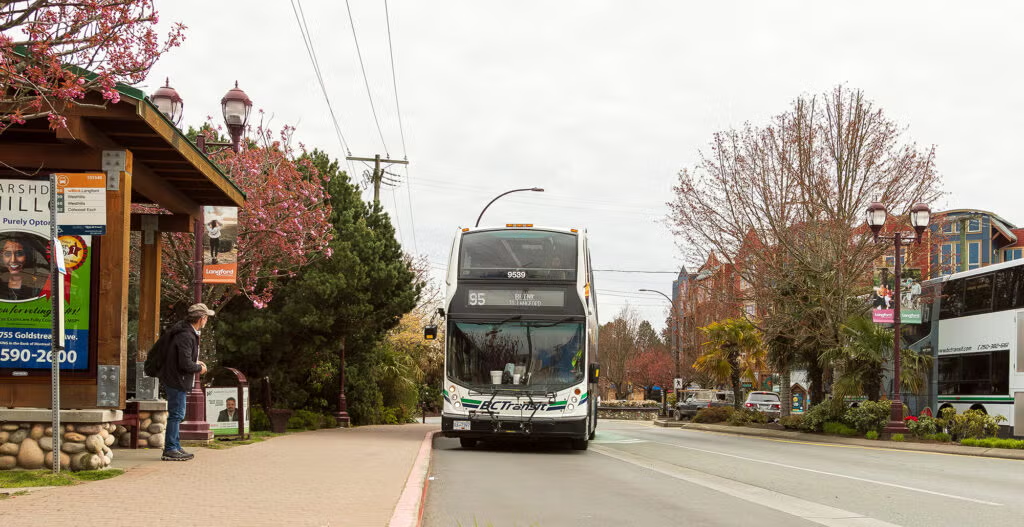
Buying Near Transit Expansions: Opportunity or Risk?
March 14, 2026
Transit changes how people move, but it also changes how neighbourhoods are valued. Buying near transit expansion can be a smart long-term play, and buying near transit expansion can also create risks that are easy to underestimate when buyers focus only on future convenience. The real question is not whether transit is good or bad. It is whether the specific property, location, and timeline make sense for your goals.
For some buyers, proximity to future transit means stronger resale potential, easier commuting, and better long-term appeal. For others, it can mean years of construction, more traffic, more density, and a property that feels less private than expected. That is why this decision needs more than optimism. It needs context.
Why Transit Expansion Attracts Buyers
New or improved transit often signals public investment. That matters because infrastructure tends to reshape buyer behaviour over time.
What buyers often like
Improved convenienceEasier commuting can make a home more practical for work, school, and daily errands.
Broader resale appealHomes near reliable transit often attract a wider buyer pool, especially first-time buyers, downsizers, and households trying to reduce car dependence.
Neighbourhood investmentTransit upgrades can bring new retail, public improvements, and more attention to surrounding areas.
Potential long-term upsideIf a neighbourhood becomes more connected and more desirable, property values may benefit over time.
This is why some buyers actively target areas just outside already-established transit hubs. They are trying to buy before the convenience is fully priced in.
Where the Opportunity Can Be Real
Buying near planned transit is often most attractive when the area is still in transition but already has strong fundamentals.
Signs the opportunity may be stronger
The neighbourhood already has schools, shopping, parks, and services
Demand exists even without the transit upgrade
The property has solid livability today, not just future promise
The transit plan is funded and moving forward, not just conceptual
Zoning changes may support more housing, amenities, or mixed-use growth nearby
A good transit story should be a bonus, not the entire reason a property makes sense.
Where the Risk Starts to Show
Transit expansion sounds positive in marketing language, but the lived experience can be more complicated.
Risks buyers should think through
Construction disruptionLarge infrastructure projects can bring noise, dust, detours, and delays for months or years.
Uncertain timelinesA planned improvement may take far longer than expected. Buyers who stretch financially based on future convenience can end up disappointed.
More density nearbyTransit investment often supports denser development. That can help values, but it can also change the character of a street faster than some owners expect.
Noise and privacy concernsBeing near transit is not the same as being on top of it. Properties too close to busy corridors may face ongoing noise, lighting, or activity concerns.
Pricing ahead of realitySome homes are marketed as though the benefit is already fully delivered. Buyers can end up paying tomorrow’s premium today.
This is where many mistakes happen. Buyers hear “up-and-coming” and assume guaranteed appreciation. Real estate rarely works that neatly.
Distance Matters More Than People Think
Not every home near transit benefits equally. In many cases, the sweet spot is not the property closest to the line, station, or corridor.
The better question to ask
Instead of asking, “Is it near transit?” ask:
Is it walkable to transit without being directly exposed to the drawbacks?
Is the route safe, practical, and appealing year-round?
Will the property still feel comfortable if service frequency increases and the area gets busier?
Does the location work for your lifestyle even if the expansion is delayed?
Often, a home that is a short walk away performs better than one directly beside a major stop or corridor.
Buyers and Investors See Transit Differently
Your goal should shape how you evaluate the opportunity.
If you are buying to live there
Focus on:
daily convenience
noise levels
traffic patterns
future neighbourhood character
whether the home still feels right beyond the investment story
If you are buying as an investment
Focus on:
tenant demand
walkability
future redevelopment potential
holding costs during the transition period
whether purchase price already reflects the expected upside
A property can be a smart investment and still be the wrong home for an owner-occupier. The reverse is also true.
Questions Buyers Should Ask Before Writing an Offer
Transit expansion should push buyers to do deeper due diligence, not less.
Smart questions to investigate
What exactly is being built, improved, or proposed?
Is the project funded and approved?
What is the expected timeline?
Will nearby road patterns, parking, or access change?
Is rezoning expected around the corridor or station?
How close is the property to the actual source of noise or activity?
How has the seller priced the home relative to current conditions, not future speculation?
These questions help separate genuine opportunity from optimistic storytelling.
A Better Way to Think About It
Buying near transit expansion is rarely a simple yes or no. It is more like a trade-off analysis.
It may be an opportunity when
you are buying in a location with strong fundamentals
the property works for you today
the transit improvement is credible and funded
the price does not overstate the future upside
you are positioned to hold long enough to benefit
It may be a risk when
the value depends heavily on a project that is still uncertain
the property is too close to the negative impacts
you dislike density, traffic, or neighbourhood change
you are stretching your budget based on future assumptions
the resale story sounds stronger than the day-to-day livability
Final Thoughts
Transit expansion can improve convenience, support neighbourhood growth, and create meaningful long-term value. But not every property near a transit corridor is automatically a smart buy. The strongest purchases usually come from balancing infrastructure upside with real-world livability, pricing discipline, and a clear plan for how long you intend to own.
If you are weighing the pros and cons of buying near transit expansion in Greater Victoria or the Westshore, contact Faber Real Estate Group for clear advice on which locations offer real opportunity and which ones may carry more risk than reward.
Raymond S., 5-Star Review, via Google
“Cal and his team at the Faber Real Estate Group went above and beyond in helping us to find a home that would meet our criteria. We always felt as though we were their most important clients. Cal and Scott's negotiating skills helped us to stay within our budget and still fulfill all of our requirements. Besides the teams professionalism and knowledge, we also appreciated their honesty and high standards regarding moral values.
Cal and the team helped make buying a home a pleasant experience.”
Faber Real Estate Group
Royal LePage Coast Capital Realty
📞 250-244-3430
📧[email protected]
ℹ️ Scott Faber Personal Real Estate Corporation
ℹ️ Cal Faber Personal Real Estate Corporation
Vanessa Wood, Zachary Parsons, and Sophie Taylor
“Building Lasting Relationships, One Home at a Time.”
Read more