
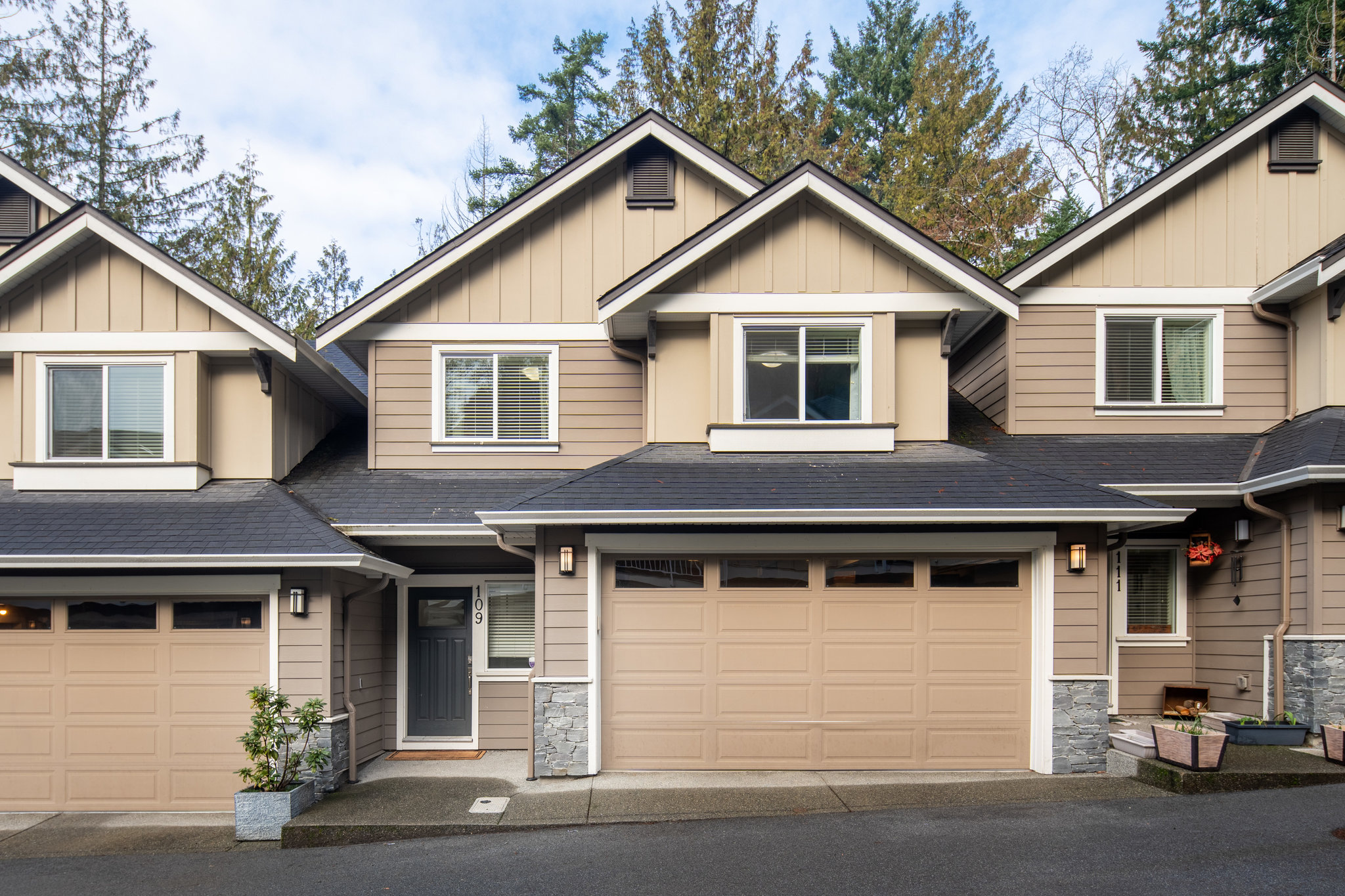
How Much Down Payment Do You Need to Buy a Home in Victoria?
Updated October 2026 | By Faber Real Estate Group
If you’re planning to buy a home in Victoria, BC, one of the first questions you’ll likely ask is how much money you need for a down payment.
The answer might be less than you expect.
The minimum down payment for a $500,000 home is $25,000. For a $750,000 property, it’s $50,000. Even a $1 million home can qualify for a minimum down payment of $75,000.
You don’t necessarily need 20% down to enter the Greater Victoria real estate market.
But there’s an important distinction between having enough money for a down payment and being financially prepared to buy a home.
Understanding that difference can help you set a realistic savings goal, avoid unexpected expenses, and make better decisions about when and where to buy.
What Is the Minimum Down Payment in Victoria, BC?
Canada’s minimum down payment requirements depend on the property’s purchase price.
Under the federal mortgage rules in effect in 2026:
- $500,000 or less: A minimum of 5% down.
- Over $500,000 but below $1.5 million: 5% on the first $500,000, plus 10% on the remaining amount.
- $1.5 million or more: A minimum of 20% down.
These minimums generally apply to eligible purchases where the buyer qualifies for the necessary mortgage financing and mortgage default insurance. Some lenders or property types may require more.
How Much Down Payment Do You Need for a $500K, $750K, $1M or $1.25M Home?
Here’s how the numbers compare for four common Greater Victoria purchasing budgets.
| Home Price | Minimum Down Payment | 20% Down Payment |
|---|---|---|
| $500,000 | $25,000 | $100,000 |
| $750,000 | $50,000 | $150,000 |
| $1,000,000 | $75,000 | $200,000 |
| $1,250,000 | $100,000 | $250,000 |
These calculations assume eligible residential purchases and exclude closing costs, mortgage insurance premiums, and applicable taxes.
The difference between the minimum and a 20% down payment is significant.
For someone considering a $750,000 townhouse, saving $50,000 instead of $150,000 could mean entering the market years earlier.
Of course, a smaller down payment also means a larger mortgage, additional insurance costs, and potentially higher monthly payments.
That’s why the minimum required and the amount that makes financial sense aren’t always the same.
How Much Down Payment Do You Need for a $750,000 Home in Victoria?
A $750,000 purchase requires a minimum down payment of $50,000.
Here’s the calculation:
- First $500,000 × 5% = $25,000
- Remaining $250,000 × 10% = $25,000
- Total minimum down payment = $50,000
That leaves a base mortgage of $700,000 before any mortgage insurance premium is added.
At this price point, buyers might consider townhomes in Langford or Colwood, condos in established Victoria neighbourhoods, or other options throughout Greater Victoria, depending on current inventory.
However, having $50,000 saved doesn’t automatically mean you’re ready to purchase.
You’ll also need to account for closing costs, property transfer tax where applicable, and the monthly expenses associated with owning the property.
For a closer look at how different neighbourhoods compare, read our guide to Comparing Victoria Neighbourhoods at the $800K Price Point.
Can You Buy a $1 Million Home in Victoria With Less Than 20% Down?
Yes. An eligible buyer can purchase a $1 million home with a minimum down payment of $75,000, provided they meet mortgage qualification and insurance requirements.
Before December 2024, homes priced at $1 million or more were generally excluded from insured mortgages.
Federal changes increased the insured mortgage purchase-price ceiling to below $1.5 million.
For buyers in Greater Victoria, this is an important distinction. A household considering a $1 million property may not need the $200,000 down payment often associated with that price point.
However, qualifying for the mortgage is a separate hurdle.
Your income, existing debts, credit history, mortgage stress test, property expenses, and down payment all influence how much a lender may approve.
To understand how those factors affect purchasing power, read our related article: How Much Income Do You Need to Buy a Home in Victoria?.
What Happens When You Put Less Than 20% Down?
If your down payment is below 20%, you’ll generally need mortgage default insurance.
This insurance protects the lender if you cannot repay the mortgage. It does not provide payment protection for the homeowner.
The insurance premium depends on factors such as the loan-to-value ratio and mortgage terms. It can often be added to the mortgage rather than paid entirely upfront.
A lower down payment can help you purchase sooner, but it creates a trade-off:
- You borrow more money.
- Your monthly mortgage payments will generally be higher.
- Mortgage insurance adds to your financing costs.
- You’ll begin with less equity in the property.
On the other hand, a larger down payment reduces the amount borrowed and may eliminate the need for default insurance.
The goal shouldn’t automatically be to put down as little or as much as possible. It should be to choose an amount that supports your long-term financial comfort.
A buyer who uses every available dollar for their down payment may have less flexibility for repairs, moving costs, or unexpected expenses after possession.
Don’t Forget About Closing Costs in British Columbia
Your down payment is only one part of the cash required to purchase a home.
In BC, buyers may also need money for property transfer tax, legal or notary fees, a home inspection, an appraisal, property tax adjustments, and moving expenses.
How Much Is Property Transfer Tax in Victoria?
BC generally calculates property transfer tax at 1% on the first $200,000 and 2% on the amount between $200,000 and $2 million, with higher rates applying above that threshold.
Here’s what that means for our four examples.
| Purchase Price | Property Transfer Tax Before Exemptions |
|---|---|
| $500,000 | $8,000 |
| $750,000 | $13,000 |
| $1,000,000 | $18,000 |
| $1,250,000 | $23,000 |
These figures assume a standard residential purchase with the full property interest transferring. Eligible exemptions can reduce or eliminate the tax.
Do First-Time Buyers Pay Property Transfer Tax in BC?
Qualifying first-time buyers can receive an exemption on the first $500,000 of a home’s value when purchasing an eligible property valued at up to $835,000.
A reduced exemption is available for qualifying properties priced above $835,000 and below $860,000.
For example, an eligible first-time buyer purchasing a $750,000 home could save $8,000 in property transfer tax, reducing their tax from $13,000 to $5,000.
That makes a meaningful difference to the total cash needed at closing.
For full eligibility requirements, review the BC First Time Home Buyers’ Program.
Are There Additional Savings When Buying a Brand-New Home?
Potentially, yes.
Buyers considering new condominiums and townhomes in communities such as Langford, Colwood, and other Greater Victoria areas should understand two separate programs.
BC’s Newly Built Home Exemption
Eligible buyers purchasing a qualifying newly built principal residence valued at up to $1.1 million may receive a full exemption from property transfer tax. A partial exemption is available for qualifying properties valued above $1.1 million and below $1.15 million.
Federal First-Time Home Buyers’ GST/HST Rebate
Eligible first-time buyers purchasing a new home may receive:
- Up to 100% of the applicable GST back on a qualifying home valued at $1 million or less, to a maximum of $50,000.
- A reduced rebate on qualifying homes valued between $1 million and $1.5 million.
For example, an eligible first-time buyer purchasing a newly built $1.25 million home could qualify for a $25,000 federal GST rebate.
These programs have different eligibility requirements, and the timing of an agreement, property value, occupancy, and rebate processing all matter.
They should not be treated as automatic reductions to your down payment. Before purchasing a new development or pre-sale property, confirm the applicable taxes, exemptions, and rebate arrangements with your mortgage professional and lawyer or notary.
How Can First-Time Buyers Save for a Down Payment?
Saving for a home in Greater Victoria can feel challenging, particularly when you’re balancing rent, everyday expenses, and longer-term financial goals.
Fortunately, several options may help.
First Home Savings Account (FHSA)
Eligible first-time buyers can generally contribute up to $8,000 annually, subject to available contribution room, with a lifetime contribution limit of $40,000.
Contributions are generally tax-deductible, and qualifying withdrawals for a first home are tax-free.
RRSP Home Buyers’ Plan (HBP)
The Home Buyers’ Plan allows eligible individuals to withdraw up to $60,000 from their RRSP toward a qualifying home purchase.
Unlike a qualifying FHSA withdrawal, amounts withdrawn through the Home Buyers’ Plan must generally be repaid according to the program’s rules.
Family Assistance
Some buyers receive help from family members toward their down payment.
Depending on the mortgage program, genuine non-repayable gifts from eligible family members may be accepted, subject to lender requirements and documentation.
Discussing these options with a mortgage professional early can help clarify which sources of funding are available to you.
Is It Better to Save 20% or Buy With a Smaller Down Payment?
There isn’t one answer that works for every buyer.
Consider two households looking at the same $750,000 home.
One has saved $55,000 and wants to purchase soon. Another has $150,000 available for a down payment.
The second household can borrow substantially less and generally avoid mortgage default insurance.
But the first household may still be financially prepared to buy if its income supports the mortgage, its closing costs are covered, and it has enough savings left for emergencies.
Waiting to reach 20% could mean spending additional years saving while continuing to rent. Buying sooner could mean carrying more debt and paying additional interest.
Neither option is automatically better.
What matters is understanding the cost of each decision, including how much flexibility you’ll have after becoming a homeowner.
Frequently Asked Questions About Down Payments in Victoria
Can I buy a home in Victoria with 5% down?
Yes, for an eligible property priced at $500,000 or less. Above $500,000 and below $1.5 million, the minimum down payment uses a combination of 5% on the first $500,000 and 10% on the remaining amount.
Do I need 20% down to buy a house in BC?
Not necessarily. Eligible buyers can purchase certain homes priced below $1.5 million with less than 20% down. The minimum requirement depends on the purchase price, mortgage qualification, property use, and lender requirements.
Can my deposit count toward my down payment?
Yes. The deposit you pay under a purchase contract is generally credited toward your total down payment at completion. The deposit amount and payment deadline are negotiated as part of the purchase contract, so you’ll need access to those funds at the required time.
How much should I have saved before looking at homes?
Start with the minimum down payment for your intended price range, then add anticipated closing costs and a reserve for unexpected expenses. A mortgage pre-approval can help determine whether that price range is realistic.
Your Down Payment Is the Starting Point, Not the Whole Plan
Buying a home in Victoria involves more than reaching a savings target.
You need to understand how your down payment affects your mortgage, how much cash you’ll require at closing, and what your monthly ownership expenses will look like.
A buyer with $75,000 saved may have options they hadn’t considered. Another buyer with $200,000 available might discover that putting every dollar toward the purchase isn’t the best approach.
At Faber Real Estate Group, we believe informed buyers make better decisions.
Whether you’re considering your first condo in Victoria, a townhome in Langford, or a detached home elsewhere in Greater Victoria, we can help you understand what your budget may buy and connect you with trusted mortgage professionals to review your financing options.
If you know your approximate savings, desired purchase price, and preferred neighbourhoods, connect with Faber Real Estate Group to start building a home-buying plan around your goals.
Faber Real Estate Group
Royal LePage Coast Capital Realty
📞 250-244-3430
📧 [email protected]
ℹ️ Scott Faber PREC
ℹ️ Cal Faber PREC
Vanessa Wood, Zachary Parsons, Sophie Taylor
Building Lasting Relationships, One Home at a Time.
Financial information is current as of October 2026 and is provided for general educational purposes. Mortgage qualification, insurance eligibility, taxes, and rebates depend on individual circumstances and program requirements.
Official references: Government of Canada — Down Payment Requirements · BC Property Transfer Tax · CRA First-Time Home Buyers’ GST/HST Rebate