
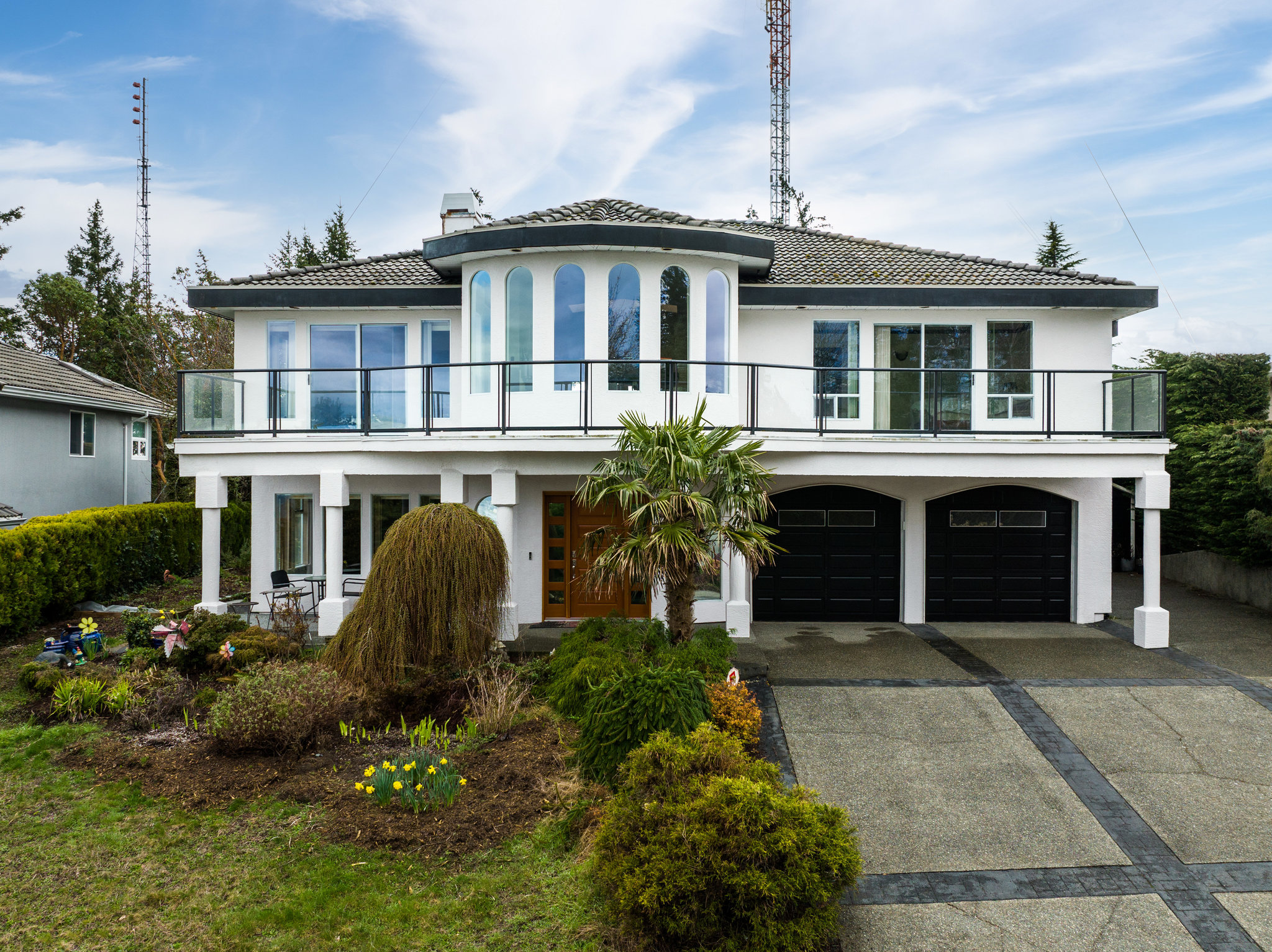
Current Vancouver Island real estate trends are showing a market that is more balanced, more selective, and more nuanced than many buyers and sellers expected. Current Vancouver Island real estate trends point to a spring market with healthier inventory, softer year-over-year sales in some regions, and pricing that is holding relatively steady rather than swinging sharply in either direction.
That matters because “Vancouver Island” is not one single market. Greater Victoria follows its own board statistics, while many other Island communities fall under the Vancouver Island Real Estate Board. Still, the broader pattern is becoming clearer: inventory has improved, buyers have more choice, and homes that are priced and presented well are still attracting attention.
Inventory Is Giving Buyers More Breathing Room
One of the biggest current shifts is selection. In the Victoria Real Estate Board region, active listings reached 2,903 at the end of February 2026, up 10.6 per cent from January and 10.4 per cent from February 2025. VREB described conditions as moving into a more balanced market as sales activity improved through February.
Outside Greater Victoria, the Vancouver Island Real Estate Board reported that February 2026 sales picked up from January while active listings rose about five per cent year over year. That does not mean every area is slow. It means buyers are no longer dealing with the same level of scarcity that defined earlier markets.
For buyers, this creates more room to compare properties, review strata documents carefully, and negotiate more strategically. For sellers, it means the market is still workable, but stronger competition is back.
Sales Activity Is Improving Month to Month, Even if Year-Over-Year Comparisons Look Softer
A common mistake is to look only at year-over-year sales and assume demand is weak everywhere. The more useful story right now is that activity is improving as spring approaches.
In Greater Victoria, total February 2026 sales were up 37.2 per cent from January, even though they were down 11.9 per cent from February 2025. VREB’s chair noted that the spring market will be worth watching closely because February showed a meaningful pickup from the slower start to the year.
VIREB also reported a February rebound as spring approached, with 465 unit sales across all property types, down three per cent from a year earlier but stronger than January.
The practical takeaway is simple. Demand has not disappeared. It has become more cautious, more price-sensitive, and more dependent on value.
Pricing Is Looking More Stable Than Dramatic
Current Vancouver Island real estate trends also show that prices are not moving in one extreme direction. In Greater Victoria, the benchmark value for a single-family home in the Victoria Core was $1,307,400 in February 2026, down 0.9 per cent from February 2025 but up from January 2026. The benchmark value for a condominium in the Victoria Core was $545,600, down 0.7 per cent year over year and also up from January.
At the provincial level, BCREA reported that the average MLS® residential price in BC in February 2026 was $932,243, down 2.9 per cent from February 2025. BCREA also said overall activity remains below historical norms, with February unit sales sitting 32.87 per cent below the ten-year average for the month.
This points to a market that is not collapsing, but also not rewarding overconfidence. Sellers who reach too high may sit. Buyers waiting for a major price drop may find that the actual story is steadier pricing combined with better choice.
Balanced Conditions Are Changing Negotiation Strategy
A balanced market changes behaviour on both sides.
Buyers often have:
-
more time for due diligence
-
more options within the same budget
-
better leverage when a listing is stale or poorly positioned
Sellers still have opportunity, but the old “list and wait for a bidding war” mindset is less reliable. In this kind of market, pricing strategy, property preparation, and strong marketing matter more because buyers can compare more inventory side by side.
This is especially important on Vancouver Island because local submarkets behave differently. A well-priced home in a desirable Victoria neighbourhood may move very differently than a larger home in a slower-moving secondary market. The Island is active, but it is not uniform.
Interest Rates and Confidence Are Still Part of the Story
BCREA has signalled that improved affordability conditions and stable rates could help bring more buyers back into the market through 2026. In a separate 2026 outlook, BCREA said economists were forecasting a provincial sales rebound, with sales expected to rise 12.8 per cent to 81,700 units as buyers re-engage.
That does not guarantee a surge everywhere, but it does support the idea that today’s market may be an early-stage transition rather than a flat year from start to finish.
For buyers, that can mean opportunity before confidence broadens. For sellers, it can mean getting ahead of more competing listings if they are planning to come to market in spring or early summer.
What This Means for Buyers Right Now
For buyers, the current Vancouver Island real estate trends suggest a market where patience and preparation can finally work together.
That means:
-
getting pre-approved before spring activity builds further
-
comparing neighbourhoods rather than chasing only one pocket
-
focusing on long-term suitability, not just short-term discount hunting
-
watching days on market and price adjustment patterns closely
In a more balanced market, the best opportunities are often not the newest listing. They are the homes where timing, presentation, and seller expectations have created room for a more thoughtful deal.
What This Means for Sellers Right Now
For sellers, the message is not negative. It is strategic.
Homes can still sell well in this environment, but they usually need:
-
accurate pricing from day one
-
polished presentation and strong photography
-
a clear value story compared with nearby competition
-
realistic expectations about negotiation
When inventory rises, buyers become better at comparison shopping. That means sellers need to remove uncertainty, not add to it.
Final Thoughts
The clearest reading of current Vancouver Island real estate trends is this: the market is active, more balanced than before, and increasingly driven by strategy rather than momentum alone. Inventory has improved, sales have started to rebound month to month, and prices appear relatively stable rather than sharply volatile.
For buyers, that creates more choice and better decision-making conditions. For sellers, it creates a market where preparation and pricing discipline matter more than ever. If you want help interpreting what these trends mean for your area, your property type, or your timing, contact Faber Real Estate Group for clear local guidance tailored to your next move.
Christina A., 5-Star Review, via Google
“We had such a great experience working with Scott Faber during our recent home buying! From the start, Scott made everything super easy and was always there to answer our questions. Scott really listened to what we wanted and helped us find the perfect place.
What we appreciated most was how down-to-earth and approachable he was. No matter what came up, Scott was on top of it and kept us in the loop the whole time. We felt like we were in great hands the entire process.
I’d definitely recommend Scott to anyone looking for a real estate pro who truly cares and knows their stuff!”
Faber Real Estate Group
Royal LePage Coast Capital Realty
📞 250-244-3430
📧[email protected]
ℹ️ Scott Faber Personal Real Estate Corporation
ℹ️ Cal Faber Personal Real Estate Corporation
Vanessa Wood, Zachary Parsons, and Sophie Taylor
“Building Lasting Relationships, One Home at a Time.”